Real Results
Before & After
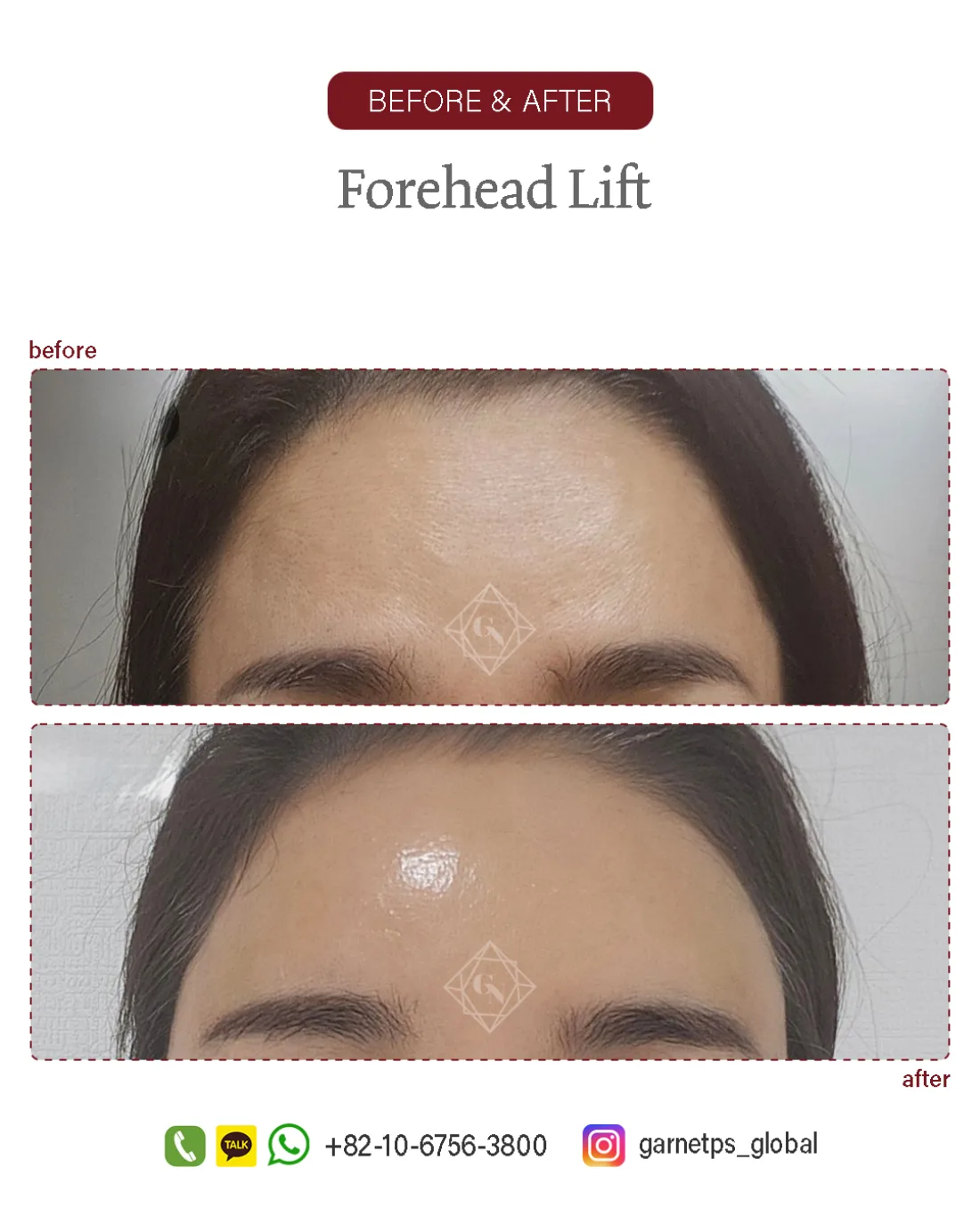
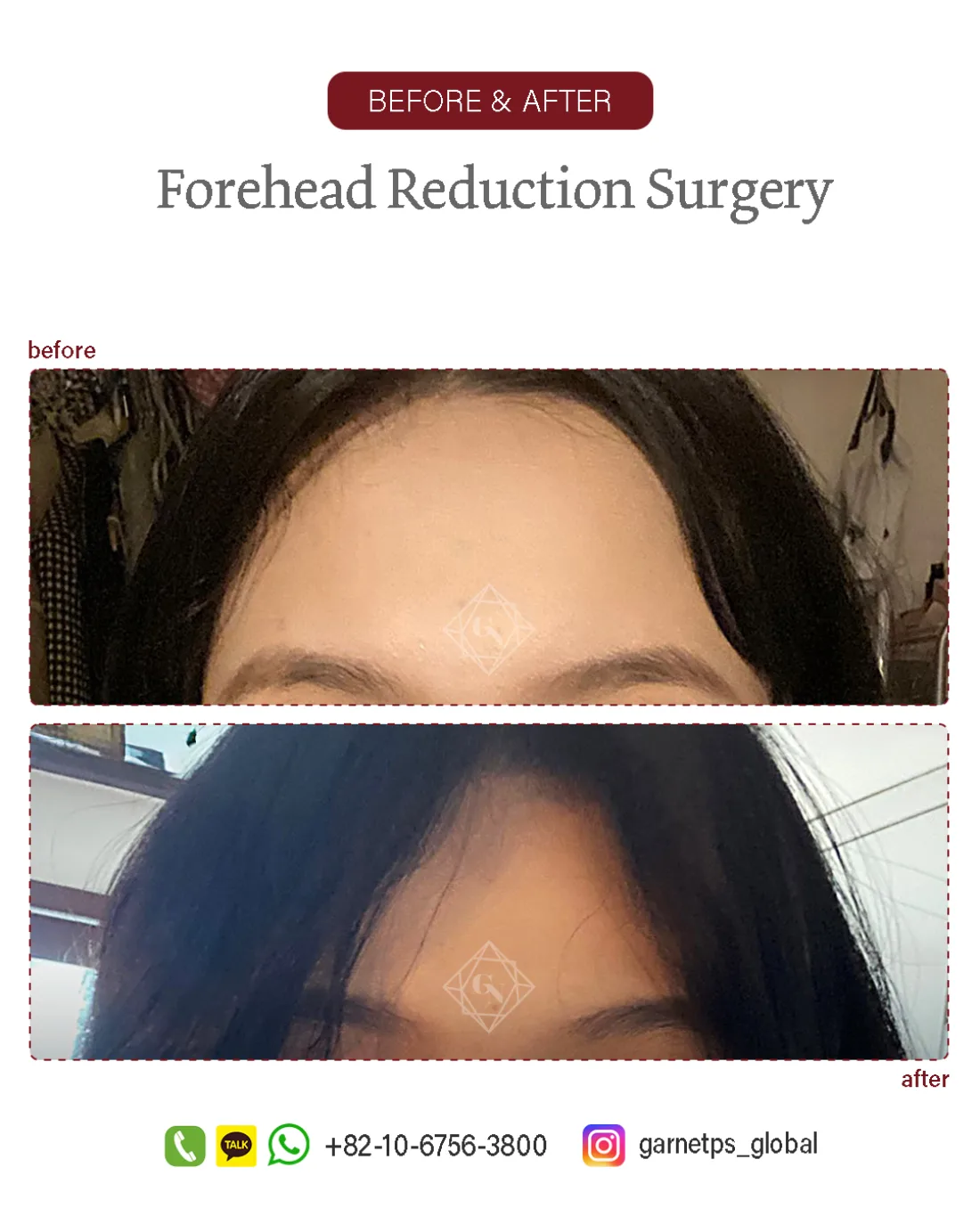
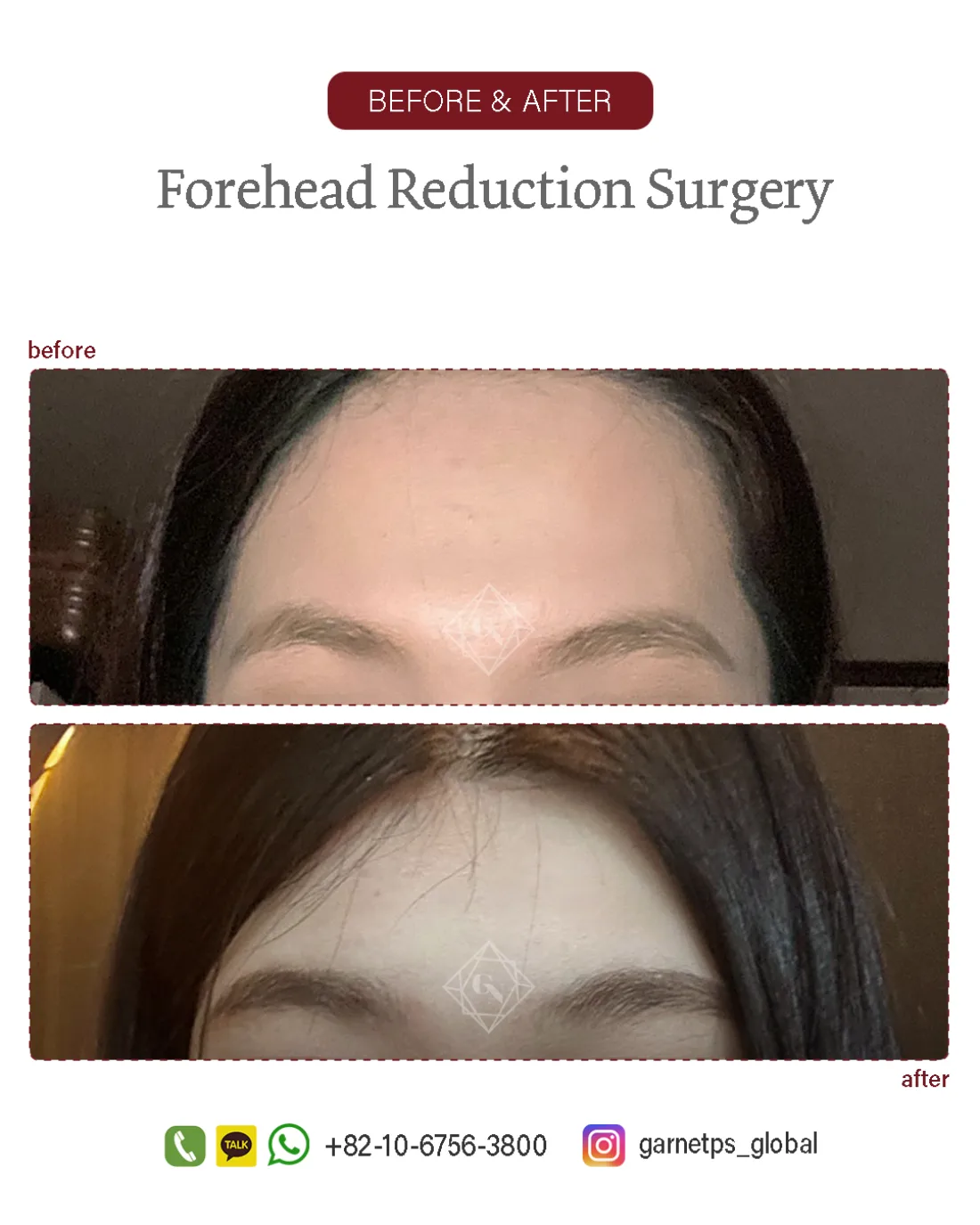
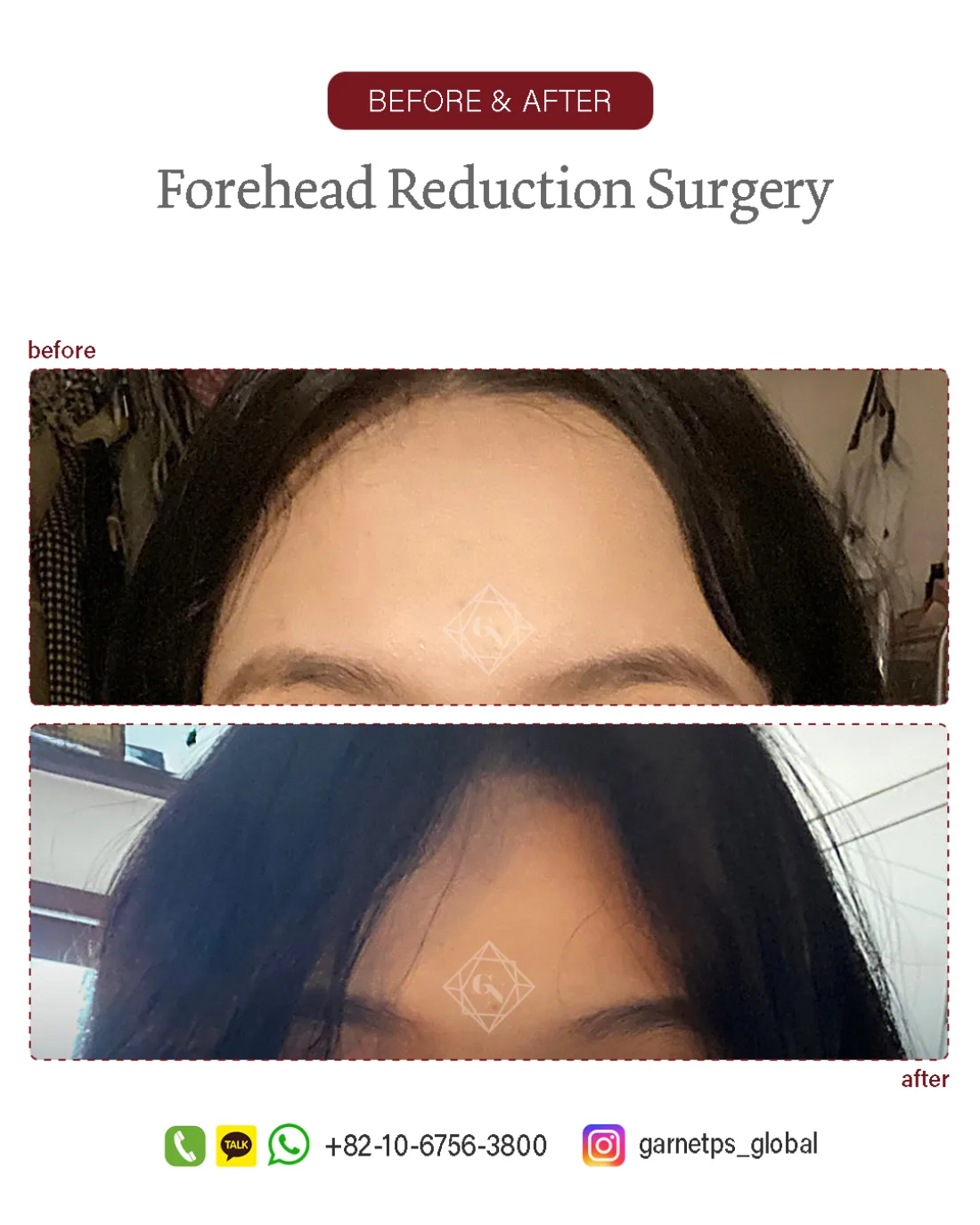
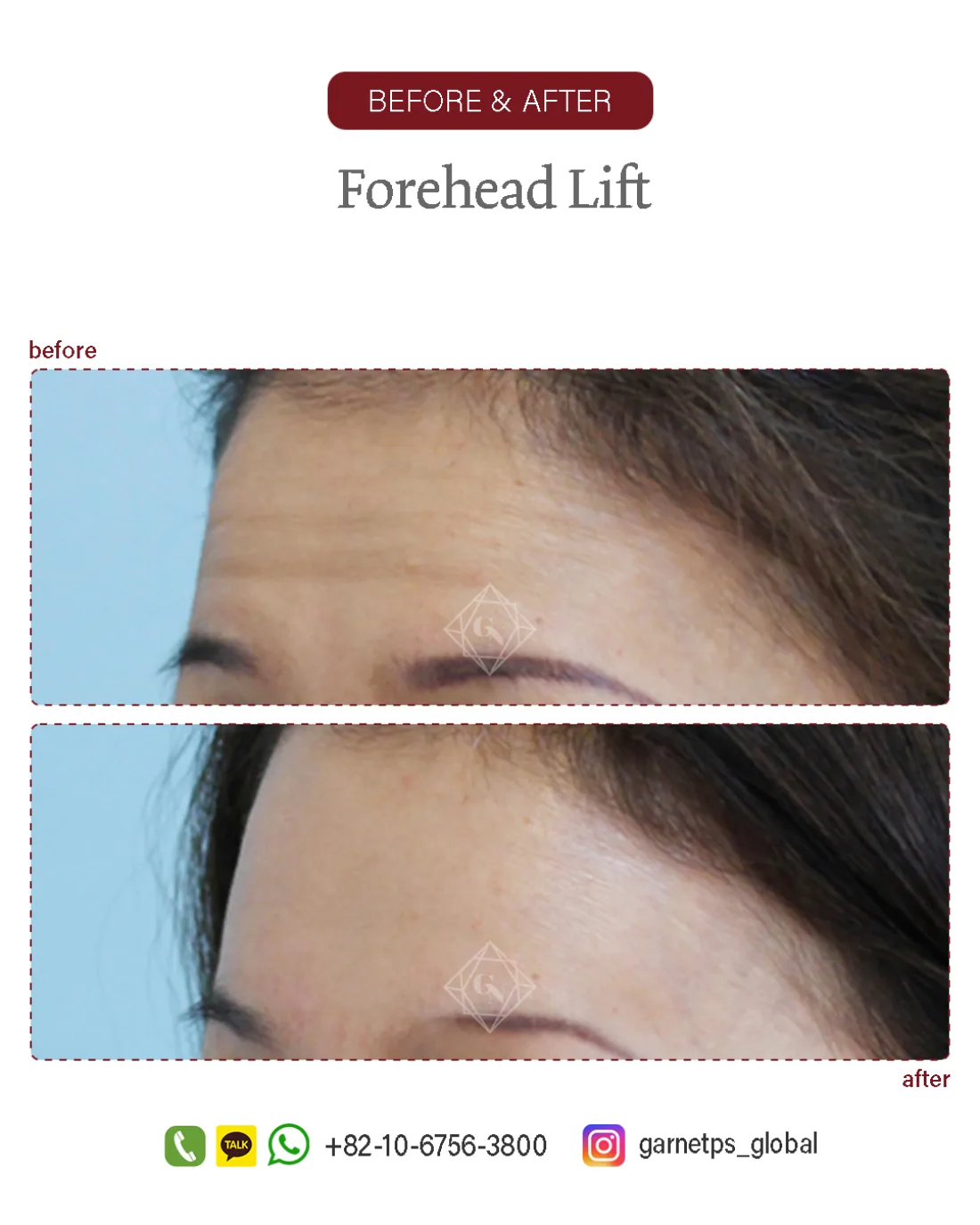
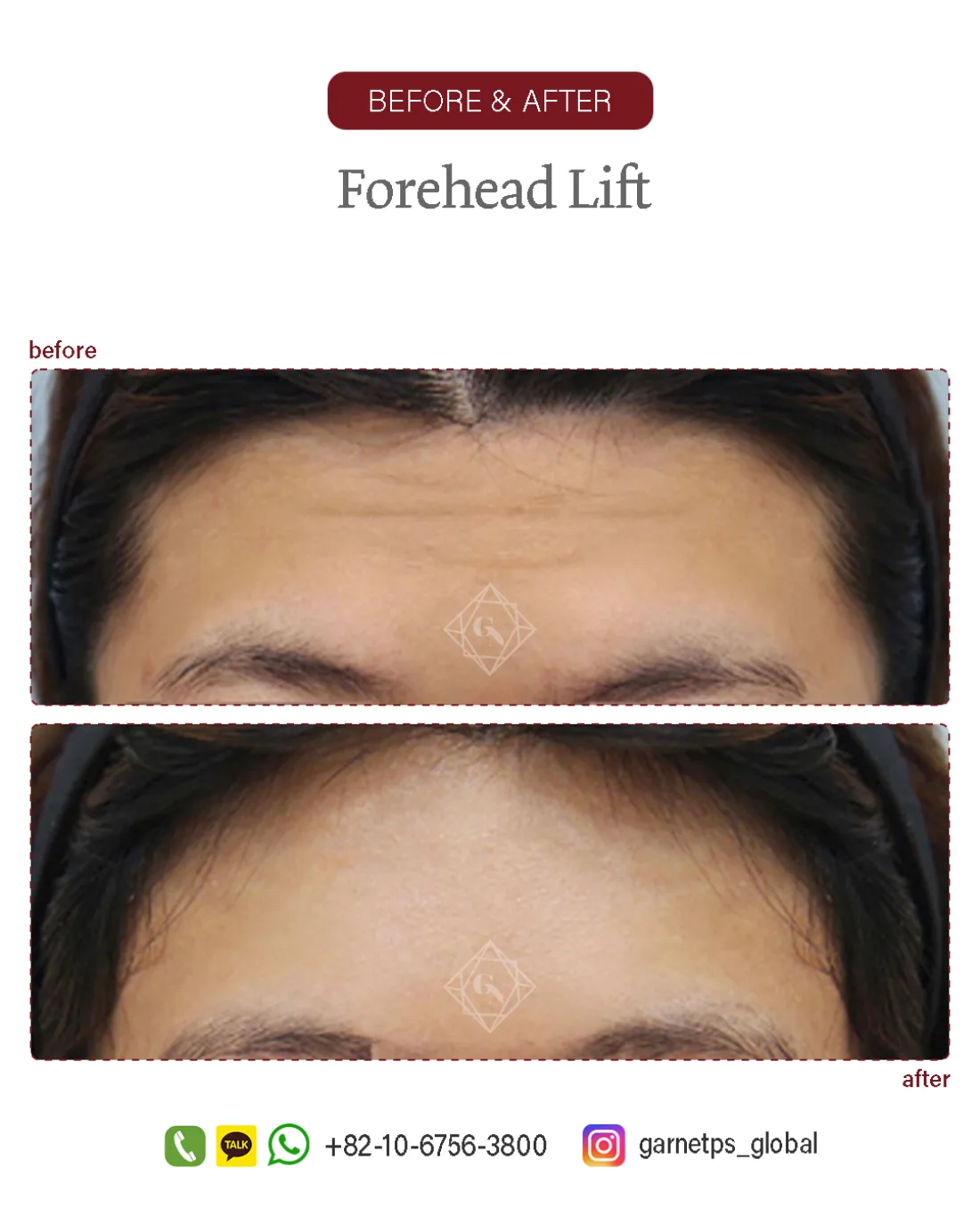
Forehead reduction before/after sets of actual Garnet patients (published with consent). Results, recovery and scar appearance vary by individual, depend on scalp laxity and hair density, and are not guaranteed.
A forehead reduction shortens a tall forehead by advancing the hairline forward, removing a measured strip of forehead skin through an incision placed right at the hairline. At Garnet it is planned and performed by one board-certified plastic surgeon, Dr. In-Soo Baek, from consultation through every follow-up.
Forehead reduction before/after sets of actual Garnet patients (published with consent). Results, recovery and scar appearance vary by individual, depend on scalp laxity and hair density, and are not guaranteed.

A forehead reduction (hairline-advancement surgery) is an operation that shortens a tall forehead by removing a measured strip of forehead skin and advancing the hairline forward, then closing the incision precisely at the front hairline so the new hairline conceals the scar. It changes the height of the forehead itself, rather than raising the brow or adding hair.
Forehead height is one of the proportions that shape how balanced a face looks - the upper third, from hairline to brow, is ideally similar in depth to the middle and lower thirds. A naturally high or long forehead, or a high frontal hairline, can throw that balance off, and no amount of styling permanently changes the bone-to-hairline distance.
A forehead reduction addresses this directly by moving the hairline. The surgeon plans how much forehead to shorten, removes a strip of forehead skin of that width, advances the hair-bearing scalp forward and closes the wound along the hairline. The incision is placed so the new front row of hair grows through and in front of the scar, which is what helps it settle inconspicuously. This is a different goal from a forehead lift, which raises the brow rather than lowering the hairline.
At Garnet this is a single-surgeon operation. Dr. Baek plans the case from the consultation - including how much advancement the scalp laxity safely allows - performs it himself, and reviews healing at set intervals; the clinic caps the day at two surgeries so each case has unhurried time. The aim is a forehead in better proportion, not the maximum possible reduction.
From the hairline incision to advancement and trichophytic closure - every step by Dr. Baek.
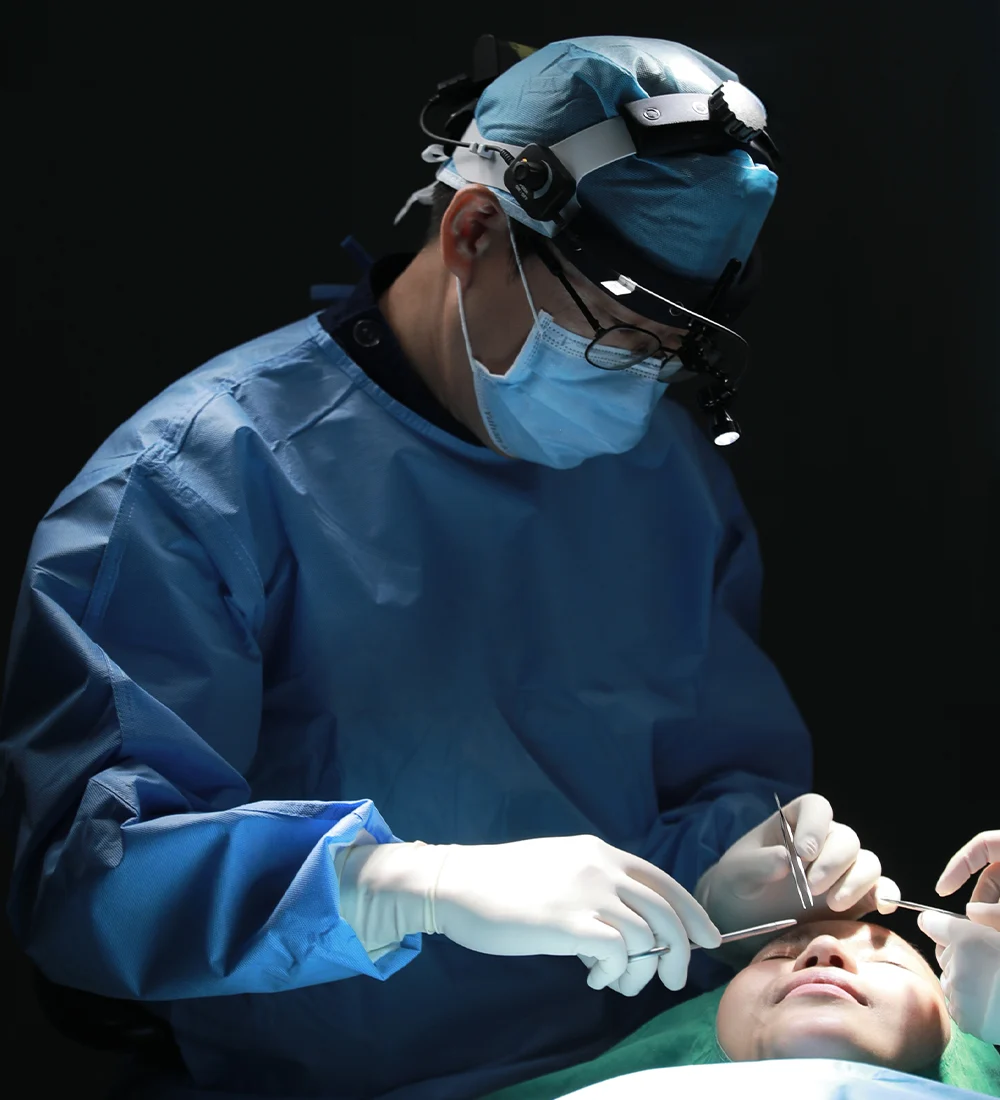
A single surgeon, start to finish. Dr. Baek plans the case, performs the operation himself and reviews every follow-up. The clinic caps the day at two surgeries, so each operation has unhurried time.
A forehead reduction at Garnet typically runs about 1.5-2 hours under sedation or general anaesthesia, decided with you after your medical history is reviewed. The steps below outline how the hairline-advancement technique is carried out.
Dr. Baek measures the forehead height and proportions, assesses hairline shape, hair density at the front and how mobile the scalp is, then agrees how much to shorten the forehead and the incision design with you.
The incision is planned right at the front hairline (a pretrichial line), often shaped irregularly so it follows the natural hairline rather than a straight line, which helps it disappear as hair grows through it.
A measured strip of forehead skin, of the planned width, is removed - this is what shortens the forehead. The width is set by the agreed reduction and what the scalp laxity safely allows.
The hair-bearing scalp is released in the loose plane beneath it and advanced forward to meet the new hairline position without undue tension on the closure.
Where the consultation shows it, a brow/forehead lift or fat grafting is considered, as a tall forehead and a low brow are separate concerns that sometimes coexist.
The hairline is closed precisely so hair can grow through and in front of the scar. Because Garnet is single-surgeon, Dr. Baek reviews you himself before you settle in and at each follow-up.
A forehead can read as tall for two reasons: a high frontal hairline, or a long distance from the brow to the hairline. The scalp itself is a layered, mobile structure - skin, the galea aponeurotica and a loose plane beneath it - and it is the laxity of that loose plane that lets the hair-bearing scalp slide forward when the hairline is advanced. How far the hairline can safely come forward in a single stage depends on how mobile the scalp is.
Because the limit is scalp laxity, the amount of reduction is planned for each patient rather than promised in advance; where more advancement is wanted than the scalp allows, a staged approach or a scalp-relaxing technique may be discussed. In large published series of hairline-lowering forehead reduction through an anterior hairline (pretrichial) incision, the procedure shortened the forehead reliably with high patient satisfaction and few serious complications (Aesthetic Plast Surg 2021; DOI 10.1007/s00266-020-02103-4). Garnet plans the incision and advancement for each hairline individually.
| Forehead reduction | Hairline-lowering hair transplant | Forehead / brow lift | |
|---|---|---|---|
| What it changes | Hairline moved forward | New hairs added in front | Brow raised |
| Result speed | Immediate | Months as grafts grow | Soon, then settles |
| Forehead height | Shortened | Shortened with density | Unchanged |
| Scar | Along the hairline | Tiny graft sites | Scalp or sub-brow |
| Typical use | Mobile scalp, good density | Thin or receding front | Heavy / low brow |
In a series of 650 forehead reductions the average skin excised was about 2.3 cm, roughly a 28% reduction in forehead length, with high satisfaction (Aesthetic Plast Surg 2025; DOI 10.1007/s00266-025-04830-y). The right approach depends on scalp laxity and hair density, and Dr. Baek advises at consultation.
A forehead reduction is usually performed under deep sedation or general anaesthesia, decided with you and the anaesthesia team for comfort and safety over the operation. Your medical history is reviewed beforehand.
Because Garnet caps the day at two surgeries, the operation is unhurried and the same surgeon who planned the case carries it out and reviews recovery - there is no separate operating doctor and no rotation of care.
Garnet is registered with Korea's foreign-patient programme; pre-operative checks, scheduling and after-care are coordinated for international visitors in English.
If your scalp laxity or hair density makes another approach more suitable, that is said at the consultation. Photos can be reviewed before you travel.
A forehead reduction leaves a scar along the front hairline, because that is where the incision is placed. The line is usually shaped to follow the natural, slightly irregular hairline rather than a straight edge, and it is closed so that hair can grow through and in front of it - a trichophytic approach - which is what helps it become inconspicuous as the new front row of hair matures.
The scar is permanent and, unlike scalp incisions hidden entirely within the hair, sits at the visible hairline edge, so its appearance matters and depends on individual healing and hair density. It is typically not obvious once mature and hair has grown through it, and it can usually be concealed with a fringe early on. Dr. Baek reviews scar maturation at the 1-, 3- and 6-month visits and advises on scar care.
Keep the head elevated, use cold compresses early, take medication as prescribed, sleep on your back, keep the hairline incision clean and dry as advised, and keep your follow-up visits.
Strenuous exercise, bending and heavy lifting early on, alcohol and smoking, very hot showers/saunas, tight headbands across the incision, and direct sun on the healing hairline scar until cleared.
A forehead reduction is a one-time structural change: once the hairline is advanced and healed, the new forehead height is stable, because the bone-to-hairline distance has been physically shortened rather than temporarily disguised. In large published series of hairline-lowering forehead reduction, the procedure shortened the forehead reliably with high patient satisfaction (Aesthetic Plast Surg 2021; DOI 10.1007/s00266-020-02103-4).
What can change over time is the surrounding hairline itself - ongoing hair thinning or recession is a separate process and is assessed beforehand, since it affects who is a good candidate. The hairline scar continues to mature and usually becomes less noticeable as the front row of hair grows through it. Brow position and forehead lines age independently and can be addressed separately.
A tall forehead and a heavy, low brow are different concerns that sometimes coexist; where both are present a forehead lift may be considered alongside or instead, and the plan is set at consultation.
Fat grafting to a flat or hollow temple can refine upper-face contour after the hairline is brought forward, for a more balanced result.
Where upper-eye hooding is also a concern, an upper blepharoplasty is sometimes planned in the same trip, addressing a separate part of the upper face.
Front hairline density is assessed first; where it is thin, a hair-transplant approach may be more appropriate than, or staged with, surgical advancement - discussed honestly at consultation.
Every operation carries risk. For a forehead reduction the visible scar runs along the front hairline, and its final appearance - though usually inconspicuous once hair grows through it - is the main consideration; healing varies by individual and by hair density. Swelling, bruising and temporary numbness behind the incision are common early and usually settle.
Less common risks include temporary or, occasionally, lasting altered sensation of the scalp in front of the incision, temporary shedding of hairs near the wound (which usually regrows), wider scarring if the closure heals under tension, and the limit that scalp laxity places on how much the hairline can advance in a single stage. Smoking raises wound-healing and scar risks. These are explained individually at consultation.
What reduces risk in practice: careful candidate selection (scalp laxity and hair density), a tension-controlled trichophytic closure, and follow-up by the operating surgeon. Garnet's single-surgeon, low-volume model is built around exactly this kind of unhurried planning and personal after-care. Large series report the procedure to be reliable with few serious complications (Aesthetic Plast Surg 2025; DOI 10.1007/s00266-025-04830-y).
Most international patients plan roughly 10-14 days in Korea for a forehead reduction, so sutures along the hairline can be removed by the surgeon and the early swelling has settled before travel. The coordinator confirms the timing for your specific plan.
Before you travel, send clear photos (front, three-quarter and side, with the hair pulled back to show the hairline) and a note on your concern and dates through WhatsApp, LINE or the form below. You'll get an honest pre-assessment - including whether your scalp laxity and hair density suit surgical advancement - rather than a hard sell.
Garnet is registered with Korea's foreign-patient programme and coordinates consultations, scheduling and after-care in English. After you return home, Dr. Baek can continue to review your recovery and the maturing hairline by messenger.
| Forehead reduction | Hairline-lowering hair transplant | Forehead / brow lift | |
|---|---|---|---|
| What it changes | Hairline moved forward | New hairs added in front | Brow raised |
| Result speed | Immediate | Months as grafts grow | Soon, then settles |
| Forehead height | Shortened | Shortened with density | Unchanged |
| Scar | Along the hairline | Tiny graft sites | Scalp or sub-brow |
| Typical use | Mobile scalp, good density | Thin or receding front | Heavy / low brow |
Citations are provided for general education. This page is informational and does not replace an in-person consultation; suitability, technique and recovery are individual.
Send photos and your question before you travel. An English-speaking coordinator reviews every enquiry and replies with honest guidance on whether surgery is appropriate, the likely plan and timing.
Prefer to chat now? Reach the coordinator directly: