Garnet Plastic Surgery · Apgujeong, Seoul — one board-certified surgeon, eye · nose · lifting
Procedures
Eye Surgery
Lower blepharoplasty Upper blepharoplasty Non-incision double eyelid Incision double eyelid Ptosis correction Epicanthoplasty Lateral canthoplasty Under-eye fat repositioning Sub-brow / brow lift Round eye correction
Rhinoplasty
Rhinoplasty Implant-free rhinoplasty Revision rhinoplasty Rib-cartilage rhinoplasty Septal/ear-cartilage rhinoplasty
Facial Lifting
Mini facelift Deep mini facelift™ Full facelift Neck lift
Forehead & Brow
Forehead lift Forehead reduction
Fat Grafting & Contouring
Fat grafting Stem cell fat grafting Pelican™ double-chin & neck contouring Fixpoint Thread Lift™ Neck/cheek/jawline liposuction Corset platysmaplasty
Surgeon Trademarks Before & After Visiting FAQ Book Consultation
Garnet/Fat Grafting & Contouring/Fixpoint Thread Lift™
Board-certified Plastic Surgeon · Apgujeong, Seoul

Fixpoint Thread Lift™ — early laxity lifted with fixed-point barbed threads.

A thread lift repositions soft tissue for early facial laxity using fixed-point barbed threads placed through fine cannula points, without a surgical incision. At Garnet it is planned and performed by one board-certified plastic surgeon, Dr. In-Soo Baek, from consultation through every follow-up.

~30–60 min
typical procedure time
Incision-free
fine cannula entry
1
surgeon, every step
Anaesthesia
Local / sedation as appropriate
Procedure time
~30–60 minutes
Sutures out
No incision line
Social downtime
~3–7 days
Follow-up
1 / 3 / 6 months
10,000+ fat-grafting cases since 2011· Board-certified plastic surgeon — accredited member, Korean Society of Plastic & Reconstructive Surgeons· Foreign-patient programme registered· Single-surgeon practice

The bottom line

What it is
A minimally invasive lift that uses fixed-point barbed threads, placed through fine cannula points, to reposition and support soft tissue for early laxity — without a surgical incision and with a much shorter recovery than a facelift.
Best for
Early sagging of the mid-face, jowl or jawline, or a wish for a modest lift with little downtime, where a full surgical lift is more than is needed.
Who performs it
Dr. In-Soo Baek only — a board-certified plastic surgeon and Garnet's sole operating doctor. The same surgeon consults, places the threads and follows up.
Downtime
No incision line, as access is through fine cannula points; mild swelling, tightness and occasional bruising are usual and most settle within about three to seven days.
Longevity
Absorbable threads dissolve over months, while the effect is shorter-lived than surgery; a thread lift is a temporary, repeatable lift rather than a permanent one. Results vary by individual.
How to start
Send photos through WhatsApp or the form below for an honest, no-obligation pre-assessment before you travel.
Before & after Candidacy What it is How it's performed The anatomy Thread lift vs facelift Anaesthesia & safety Entry points Recovery Longevity Combining Risks International patients FAQ

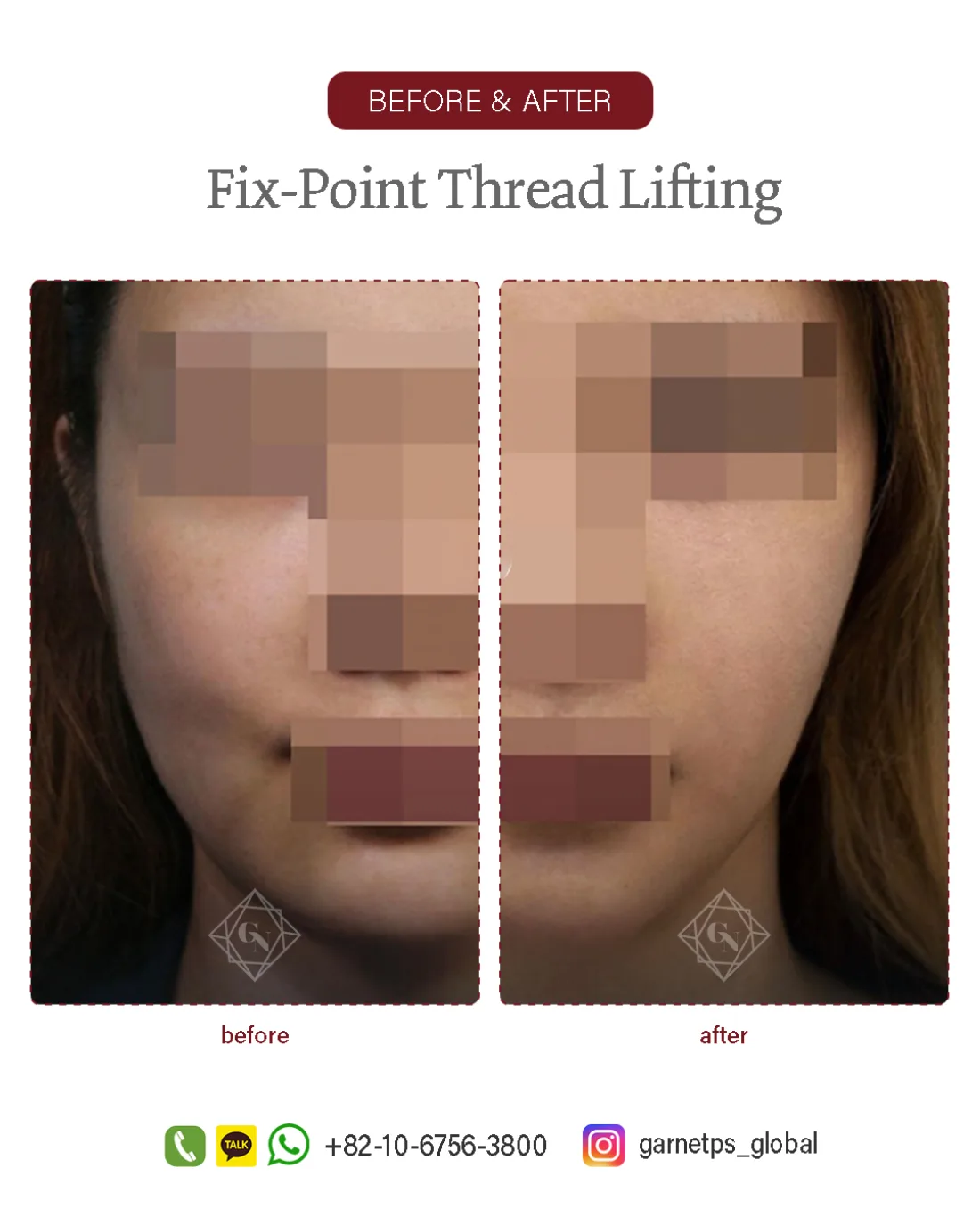
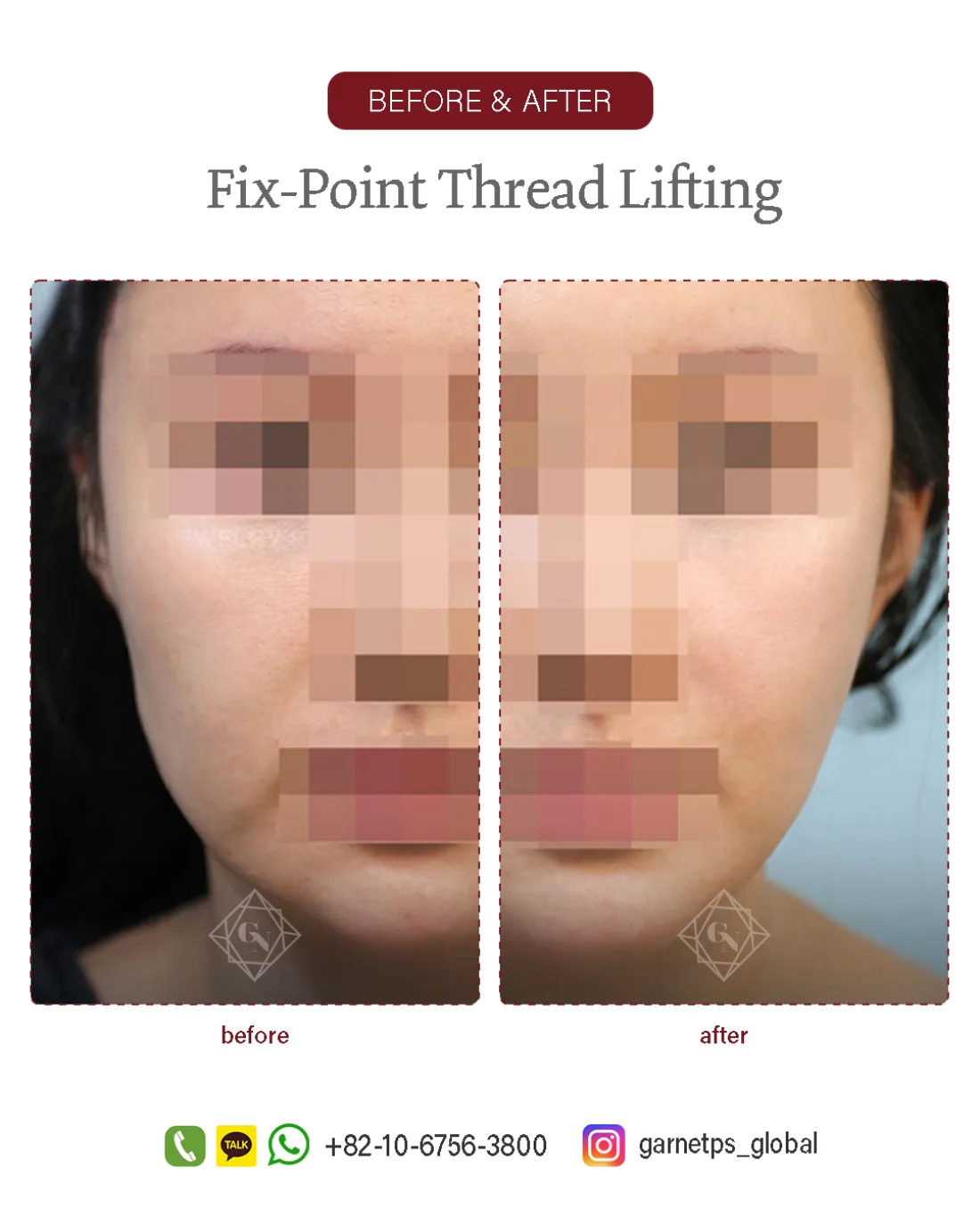
Before & After

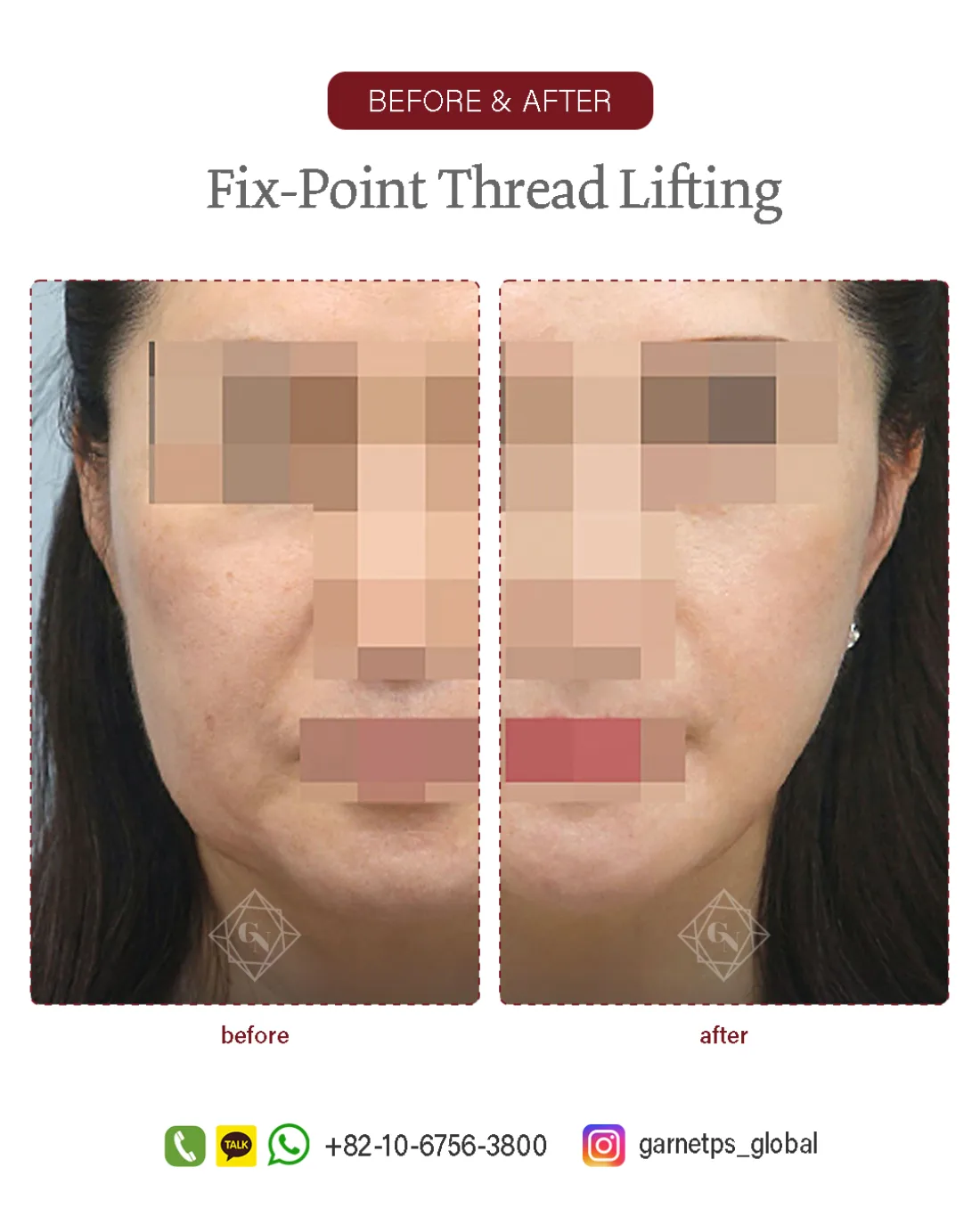
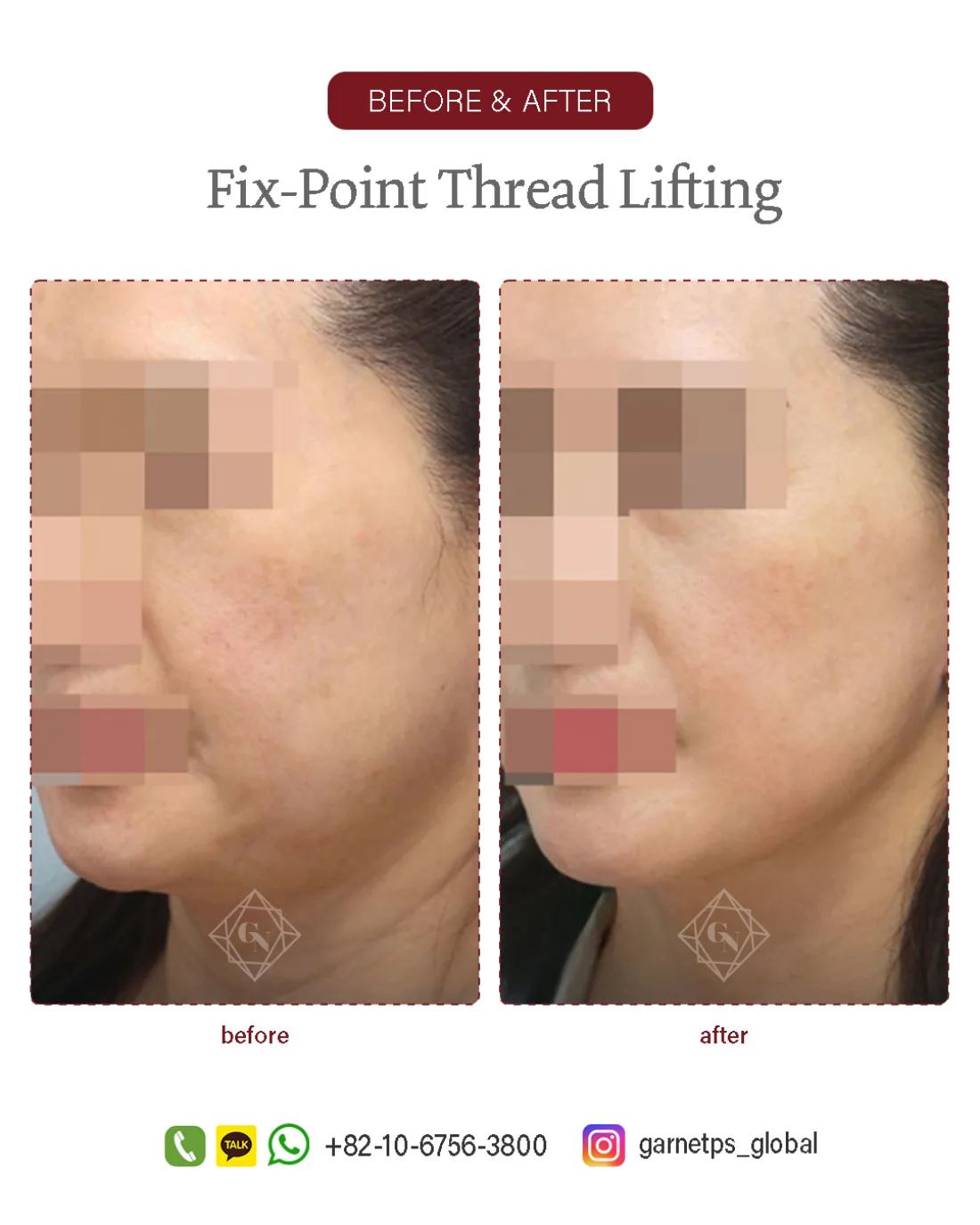
Thread-lift and contouring results of actual Garnet patients (published with consent, with date, procedure and clinic labelled). The lift is temporary and results, recovery and suitability vary by individual and are not guaranteed.

Is it right for you?

Often a good fit

  • Early sagging of the mid-face, jowl or jawline
  • A wish for a modest lift with little downtime rather than surgery
  • Reasonable skin tone, so threads can grip and hold the tissue
  • Realistic, discussed expectations, accepting that the lift is temporary
  • Able to plan a few days for mild swelling and tightness to settle

Worth discussing other options

  • Advanced descent of the deeper layer — a surgical lift may suit better
  • Looking for a permanent, structural change
  • Heavy skin laxity that threads cannot meaningfully reposition
  • Uncontrolled medical conditions — assessed individually at consultation
  • Active smoking, which can affect healing — discussed and planned around
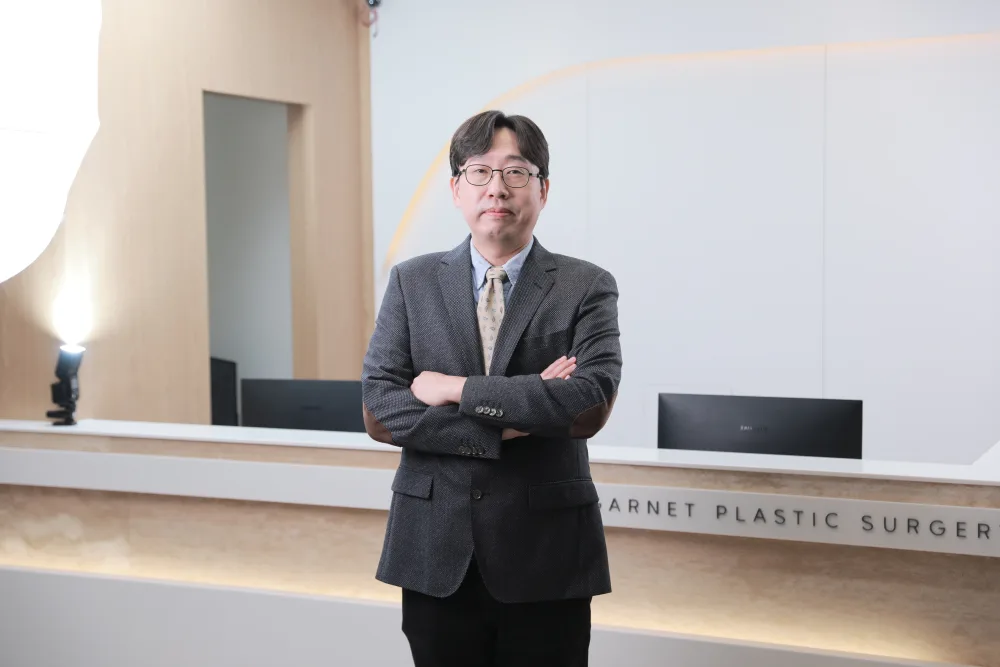
Dr. In-Soo Baek

Dr. In-Soo Baek

Director & sole operating surgeon
Korean medical licence no. 77407
  • Board-certified plastic surgeon
  • Korea University College of Medicine & graduate school (plastic surgery)
  • Member, Korean Society of Plastic and Reconstructive Surgeons (facial-contour, eye & rhinoplasty groups)
  • Every case planned, performed and followed up by the same surgeon
About the surgeon →

Lifting tissue with fixed-point threads

A Fixpoint Thread Lift™ is a minimally invasive procedure that lifts and supports sagging soft tissue using barbed absorbable threads anchored at fixed points, placed through fine cannula entry points rather than a surgical incision. The barbs grip the tissue to reposition it, and the thread is gradually reabsorbed while the lift is held.

Early facial laxity — a softening of the mid-face, the start of jowls, or a less defined jawline — can appear before the deeper changes that a surgical facelift addresses. For this stage, a thread lift offers a modest repositioning of the soft tissue with little downtime, bridging the gap between non-surgical options and surgery.

Barbed threads work by gripping the soft tissue along their length: when the thread is repositioned, the tiny barbs catch the tissue and hold it in a lifted position. Absorbable threads are gradually broken down by the body over months, and the procedure is repeatable. The Fixpoint™ approach anchors the threads at fixed points so the lift is supported where it is placed, rather than relying on the thread floating freely.

At Garnet this is a single-surgeon procedure. Dr. Baek plans the case from the consultation, places the threads himself, and reviews healing at set intervals; the clinic caps the day at two surgeries so each case has unhurried time. The stated aim is to address the laxity you arrived with proportionately, and to be honest when a surgical lift would serve you better.

One surgeon, one plan

From thread planning to fixed-point placement through fine cannula points — every step by Dr. Baek.

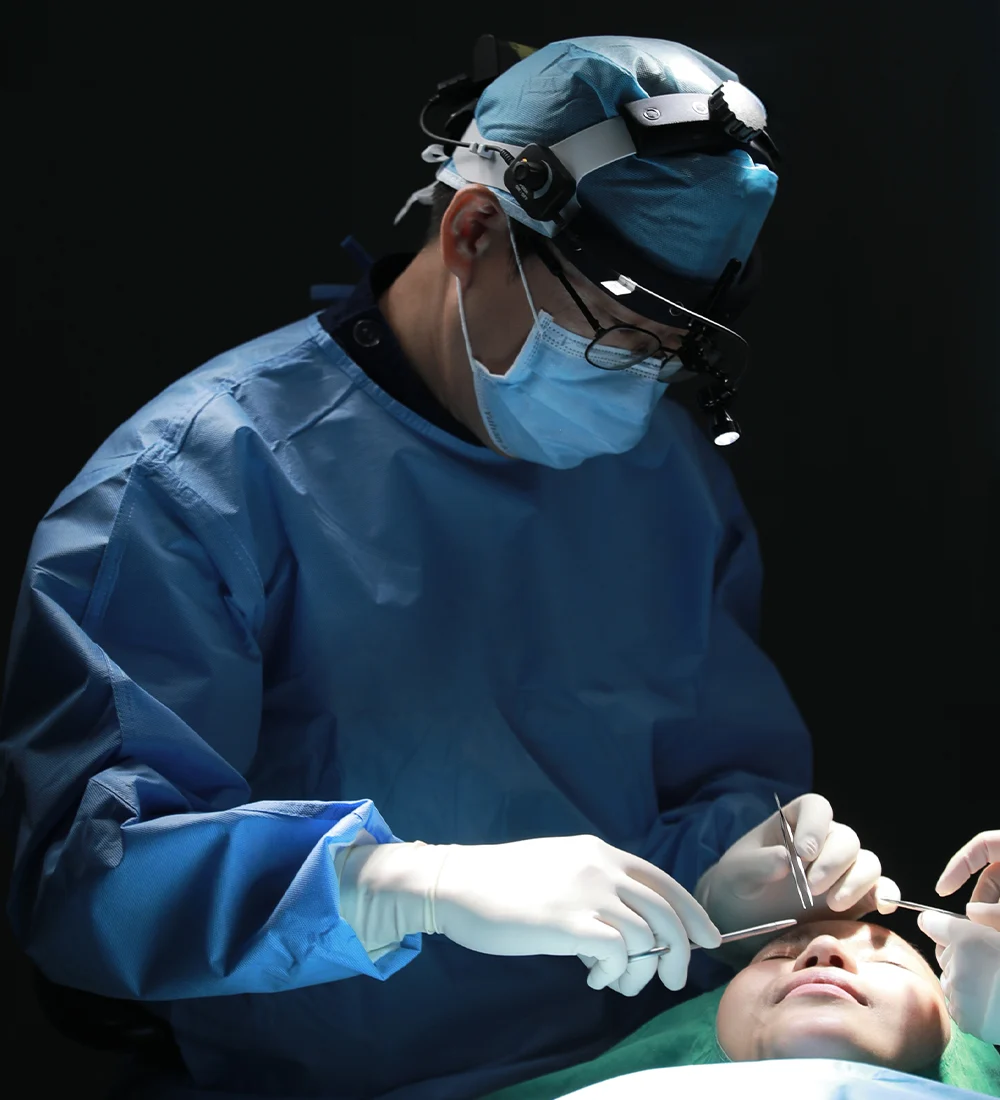
Dr. In-Soo Baek performing surgery at Garnet Plastic Surgery, Apgujeong

A single surgeon, start to finish. Dr. Baek plans the case, performs the operation himself and reviews every follow-up. The clinic caps the day at two surgeries, so each operation has unhurried time.

The procedure typically takes about 30 to 60 minutes, under local anaesthesia with sedation as appropriate, decided with you after your medical history is reviewed; the clinic does not specify a single fixed anaesthetic, so the plan is confirmed at consultation. The steps below outline how a Fixpoint Thread Lift™ is carried out at Garnet.
01

Consultation & planning

Dr. Baek assesses the degree of laxity, the mid-face, jowl and jawline, and agrees the plan with you — including an honest view on whether threads or a surgical lift fits. The number and direction of threads are planned for your face.

02

Vector design

The lift vectors are marked so the threads reposition tissue along natural lines, and the fixed anchor points are chosen to support the lift where it is placed.

03

Entry points

Fine cannula entry points are made — there is no surgical incision — and the area is prepared with local anaesthesia for comfort.

04

Fixed-point thread placement

The barbed absorbable threads are introduced through the entry points and anchored at the fixed points; the tissue is then repositioned so the barbs grip and hold it in the lifted position.

05

Adjuncts & combining

Where the consultation shows it, threads are planned alongside fat grafting for volume, or sequenced with a future surgical lift, so the overall plan fits the face.

06

Review & follow-up

The entry points are checked and after-care explained. Because Garnet is single-surgeon, Dr. Baek reviews you himself and at each follow-up, when settling and the durability of the lift are assessed.

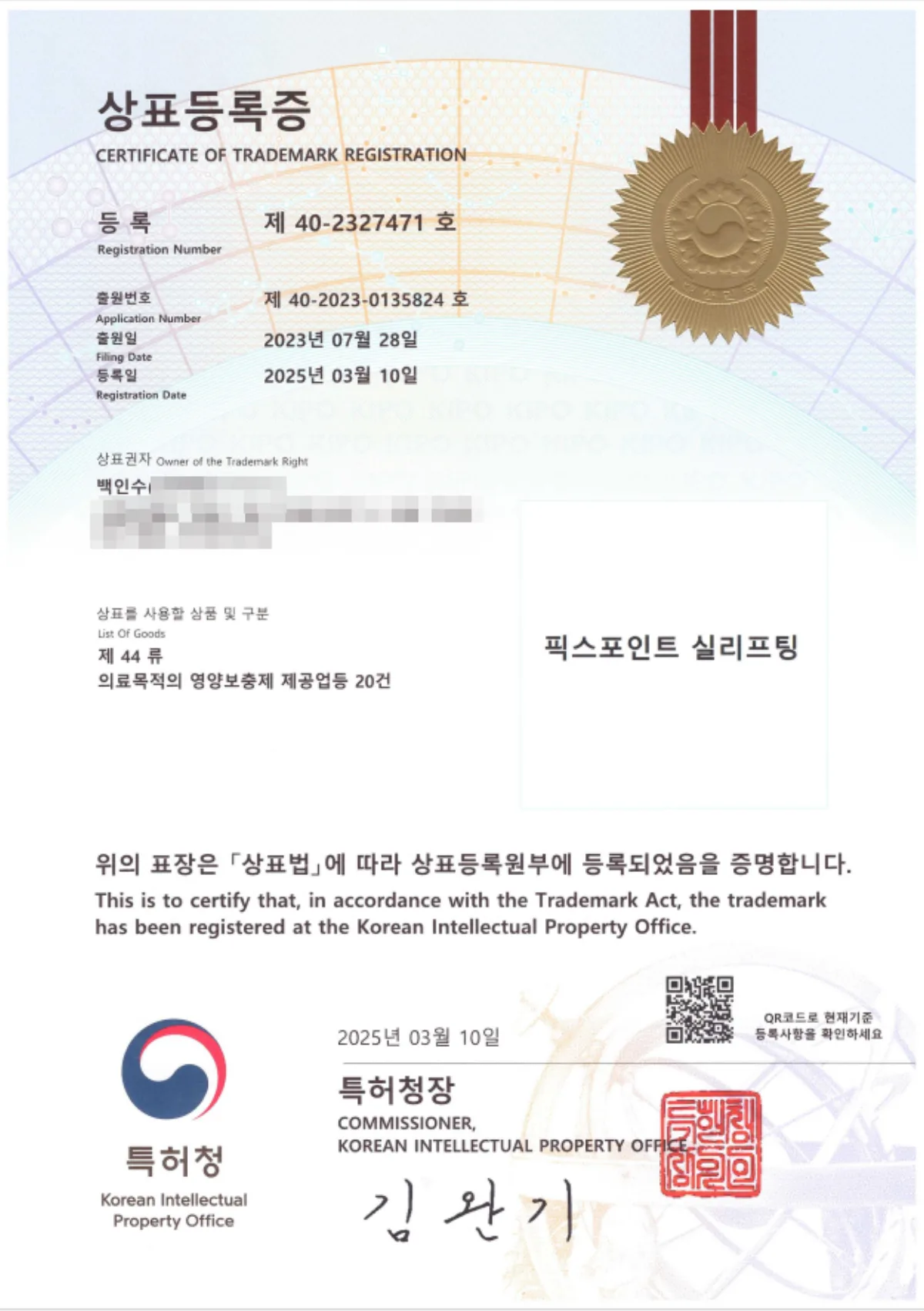
Fixpoint Thread Lift™ registered technique certificate

Fixpoint Thread Lift™ is Garnet's registered fixed-point barbed-thread technique, recorded with the Korean Intellectual Property Office. The registration describes the named technique, not a superior outcome.

What a thread can and cannot move

The face sags as the deeper support loosens: the SMAS (the continuous sheet linking the superficial facial muscles) descends, and the retaining ligaments that anchor soft tissue to the facial skeleton slacken. A surgical facelift releases and repositions this deep layer directly. A thread lift, by contrast, works within the soft tissue above it, repositioning fat and skin a more modest amount — which is why it suits earlier laxity and not advanced descent (Mendelson, Aesthetic Plast Surg 2013; DOI 10.1007/s00266-013-0066-8).

Because threads grip and hold tissue rather than removing or re-anchoring the deep layer, the lift they create is real but limited and not permanent, and the barbs' grip is what determines how the tissue is held. Reported outcomes and complications across the literature reflect this temporary, soft-tissue mechanism (Aesthetic Plast Surg 2021; DOI 10.1007/s00266-021-02256-w). Garnet matches the procedure to the degree of laxity; where the deeper layer has descended, a full facelift or mini facelift is the more appropriate option.

Thread lift vs mini facelift vs full facelift

Thread liftMini faceliftFull facelift
ApproachThreads, no incisionShort-scar surgeryDeep-plane surgery
Layer addressedSoft tissueSuperficial / SMASSub-SMAS + ligaments
Downtime~3–7 days~1–2 weeks~2–3 weeks
DurabilityTemporary, repeatableLonger-lastingLonger-lasting, structural
Best forEarly laxityLower-face laxityMid-face / jowl descent

A meta-analysis of thread-lift complications is published in Aesthetic Plast Surg 2021 (DOI 10.1007/s00266-021-02256-w). A thread lift and a facelift treat different stages; the right choice is individual, and the editorial guide on choosing a facelift clinic in Korea and Dr. Baek's consultation help you decide.

How your safety is handled

Anaesthesia

A thread lift is typically performed under local anaesthesia, with light sedation added as appropriate for comfort over a 30-to-60-minute procedure. The exact plan is decided with you after your medical history is reviewed; no single fixed anaesthetic is assumed in advance.

Single-surgeon care

Because Garnet caps the day at two surgeries, the procedure is unhurried and the same surgeon who planned the case places the threads and reviews recovery — there is no separate operating doctor and no rotation of care.

Foreign-patient programme

Garnet is registered with Korea's foreign-patient programme; pre-procedure checks, scheduling and after-care are coordinated for international visitors in English.

Honest assessment

If a thread lift would under-treat your laxity, or a surgical lift suits you better, that is said at the consultation. Photos can be reviewed before you travel.

Fine entry points, not an incision

A Fixpoint Thread Lift™ is placed through fine cannula entry points rather than a surgical incision, so there is no incision line and no sutures to remove. The entry points are small and discreet and typically fade over the days and weeks that follow.

Healing varies by individual and by skin type. Mild bruising at an entry point can occur and settles. Because there is no incision, scar concerns are minimal; Dr. Baek reviews the entry points and the lift at the 1-, 3- and 6-month visits and advises on care.

Week by week

Day of procedure
Some tightness and mild swelling where the threads sit, and occasionally minor bruising at an entry point. Most patients go about a quiet rest of the day; discomfort is usually mild and manageable with simple measures.
Days 1–3
Tightness and swelling are most noticeable then begin to settle. Eating soft food and avoiding wide mouth movements for a short time can be advised. Gentle daily activity is fine.
Days 3–7
Swelling and any bruising fade and most patients are presentable for everyday settings. The pulling sensation eases as the tissue settles around the threads.
Weeks 2–4
Residual tightness continues to ease and the lift settles to a natural position. Facial expressions feel normal again; firm massage and dental work are timed as advised.
Months 1–6
The threads are gradually reabsorbed over the following months while the lift is held. Dr. Baek reviews settling and durability at one, three and six months — in person, or by messenger after you return home.

Do

Keep the head elevated early, use cold compresses for swelling, eat soft food briefly, sleep on your back, take any prescribed medication, and keep your follow-up visits.

Avoid

Wide mouth movements and firm facial massage early on, strenuous exercise, alcohol and smoking, very hot showers or saunas, and dental work for a short period as advised.

How long does it last?

A thread lift is a temporary, repeatable lift rather than a permanent one. Absorbable threads are gradually reabsorbed over months, and while the repositioning and the tissue response can outlast the thread itself, the effect is shorter-lived than surgery and fades over time. Reported durability varies between studies and patients, so no fixed figure is promised.

How long the lift lasts depends on the degree of laxity treated, tissue quality and lifestyle. Garnet's approach is to match the procedure to early laxity, where threads perform best, and to be honest when a surgical lift would give a more durable, structural result. A thread lift can be repeated, or used to delay surgery, and this is discussed at follow-up.

Often planned together

Fat grafting

Fat grafting can restore lost volume that lifting alone does not replace, for a rested as well as a lifted look.

Mini facelift

Where laxity is a little more advanced, a mini facelift gives a longer-lasting lower-face lift through a short-scar approach, and threads may be discussed as a lighter alternative.

Neck & chin contouring

Pelican™ neck and chin contouring refines the under-chin and neckline, which can complement a mid-face thread lift.

Future surgical lift

A thread lift can be sequenced before a future full facelift, helping you delay surgery while managing early laxity.

An honest word on risk

Every procedure carries risk. For a thread lift the most commonly reported effects are swelling and tightness, with bruising, skin dimpling, temporary altered sensation, and visibility or palpability of a thread also recognised; infection and thread extrusion are uncommon. A meta-analysis of thread-lifting reported swelling as the most frequent complication, with dimpling, paraesthesia, thread visibility, infection and extrusion each less common (Aesthetic Plast Surg 2021; DOI 10.1007/s00266-021-02256-w).

Because the lift is within the soft tissue and the threads are temporary, the effect is modest and not permanent; over-treating advanced laxity with threads can disappoint, which is why matching the procedure to the stage of laxity matters. Smoking and uncontrolled medical conditions can affect healing. These are explained individually at consultation.

What reduces risk in practice: careful patient selection so threads suit the laxity, accurate vector and fixed-point placement, a sterile, gentle technique, sensible after-care, and follow-up by the operating surgeon. Garnet's single-surgeon, low-volume model is built around exactly this kind of unhurried planning and personal after-care.

Planning from abroad

Most international patients plan only a few days in Korea for a thread lift, since downtime is short, though some combine it with a longer stay for other procedures. The coordinator confirms the timing for your specific plan.

Before you travel, send clear photos (front, three-quarter and side) and a note on your concern and dates through WhatsApp, LINE or the form below. You'll get an honest pre-assessment — including whether a thread lift or a surgical lift is appropriate — rather than a hard sell.

Garnet is registered with Korea's foreign-patient programme and coordinates consultations, scheduling and after-care in English. After you return home, Dr. Baek can continue to review your recovery by messenger.

Guides for international patients

Questions about this procedure

What is a Fixpoint Thread Lift™?
It is Garnet's registered thread-lift technique that uses barbed absorbable threads anchored at fixed points, placed through fine cannula entry points without a surgical incision, to lift early facial laxity. The barbs grip the tissue to reposition it while the thread is gradually reabsorbed.
How is a thread lift different from a facelift?
A thread lift repositions soft tissue with threads for early laxity and short downtime, while a mini facelift or full facelift is surgery that repositions the deeper layer for a more substantial, longer-lasting change. Threads are temporary; surgery is structural.
Thread liftMini faceliftFull facelift
ApproachThreads, no incisionShort-scar surgeryDeep-plane surgery
Layer addressedSoft tissueSuperficial / SMASSub-SMAS + ligaments
Downtime~3–7 days~1–2 weeks~2–3 weeks
DurabilityTemporary, repeatableLonger-lastingLonger-lasting, structural
Best forEarly laxityLower-face laxityMid-face / jowl descent
Does Dr. Baek perform the procedure himself?
Yes. Garnet is a single-surgeon practice, so Dr. Baek handles the consultation, places the threads and does the follow-up personally — there is no separate operating doctor. The same is true of its surgical lifts, such as the mini facelift.
How long does a thread lift last?
It is a temporary, repeatable lift. The absorbable threads are reabsorbed over months and the effect is shorter-lived than surgery, fading over time. Reported durability varies by individual and the degree of laxity, so no fixed figure is promised.
How long should I stay in Korea?
Often only a few days, since downtime is short, though some patients combine it with a longer stay for other procedures. The coordinator confirms timing for your plan, and Dr. Baek can review recovery by messenger afterwards.
What anaesthesia is used and how much pain is there?
Typically local anaesthesia with sedation as appropriate over a 30-to-60-minute procedure, decided with you after your history is reviewed. Most patients describe pressure and tightness rather than sharp pain, eased with simple measures.
Where are the entry points and will they show?
Through fine cannula entry points, not a surgical incision, so there is no incision line and no sutures to remove. The small points are discreet and typically fade over the following days and weeks.
When will I look presentable?
Most swelling and any bruising settle within about three to seven days for everyday settings. The pulling sensation eases as the tissue settles around the threads over the following weeks.
When can I exercise again?
Gentle activity is fine soon after; strenuous exercise waits a short while and is cleared at follow-up. Firm facial massage and wide mouth movements are also limited briefly to let the lift settle.
Can I combine it with fat grafting or surgery?
Yes. A thread lift is sometimes planned with fat grafting for volume, or sequenced before a future surgical lift. Where laxity is more advanced, a mini facelift may be discussed instead.
Will a thread lift look pulled or unnatural?
The lift is modest and within the soft tissue, so it is intended to look natural rather than tight. The vectors and the amount of lift are planned and agreed at consultation, and an honest view is given on whether threads suit your laxity.
What are the main risks?
Mainly swelling and tightness, with bruising, dimpling, temporary altered sensation, or thread visibility recognised, and infection or thread extrusion uncommon. Where laxity is too advanced for threads, a surgical lift is discussed instead. These are reviewed individually at consultation.
Can I see thread-lift before-and-after photos?
Yes. Thread-lift and contouring examples of actual Garnet patients are shown on this page with consent and with the date, procedure and clinic labelled, and fat-grafting results appear separately. The lift is temporary and results vary by individual.
Is a thread lift better than a facelift?
Neither is better in general — they treat different stages. A thread lift suits early laxity with little downtime; a facelift suits advanced descent and gives a longer-lasting, structural result. Which fits you is decided at consultation.
How do I start without flying to Korea first?
Send photos and your dates through WhatsApp, LINE or the form below. You'll get an honest pre-assessment — including whether a thread lift or a surgical lift is appropriate — before you plan a trip.

Sources

  1. Niu Z, et al. A Meta-Analysis and Systematic Review of the Incidences of Complications Following Facial Thread-Lifting. Aesthetic Plast Surg. 2021. DOI 10.1007/s00266-021-02256-w. link
  2. Tong LX, et al. Two years' outcome of thread lifting with absorbable barbed PDO threads: Innovative score for objective and subjective assessment. J Cosmet Laser Ther. 2018. DOI 10.1080/14764172.2017.1368562. link
  3. Mendelson BC, et al. Anatomic Study of the Retaining Ligaments of the Face and Applications for Facial Rejuvenation. Aesthetic Plast Surg. 2013. DOI 10.1007/s00266-013-0066-8. link

Citations are provided for general education. This page is informational and does not replace an in-person consultation; suitability, technique and recovery are individual.

Ask Dr. Baek’s team

Send photos and your question before you travel. An English-speaking coordinator reviews every enquiry and replies with honest guidance on whether surgery is appropriate, the likely plan and timing.

  • Reviewed by the clinic coordinator, not a bot
  • Photo-based pre-assessment before you fly
  • Foreign-patient scheduling & after-care
  • One surgeon for consultation, surgery and follow-up

Prefer to chat now? Reach the coordinator directly:

Request a consultation

  • WhatsApp
  • LINE
  • WeChat
  • Telegram
  • Email
  • Eye surgery
  • Rhinoplasty
  • Facial lifting
  • Forehead & brow
  • Fat grafting & contouring
  • Revision

Submits in real time to Garnet’s Supabase intake (branch: garnet). Your details are handled per our privacy policy.

Book consultation