Garnet Plastic Surgery · Apgujeong, Seoul — one board-certified surgeon, eye · nose · lifting
Procedures
Eye Surgery
Lower blepharoplasty Upper blepharoplasty Non-incision double eyelid Incision double eyelid Ptosis correction Epicanthoplasty Lateral canthoplasty Under-eye fat repositioning Sub-brow / brow lift Round eye correction
Rhinoplasty
Rhinoplasty Implant-free rhinoplasty Revision rhinoplasty Rib-cartilage rhinoplasty Septal/ear-cartilage rhinoplasty
Facial Lifting
Mini facelift Deep mini facelift™ Full facelift Neck lift
Forehead & Brow
Forehead lift Forehead reduction
Fat Grafting & Contouring
Fat grafting Stem cell fat grafting Pelican™ double-chin & neck contouring Fixpoint Thread Lift™ Neck/cheek/jawline liposuction Corset platysmaplasty
Surgeon Trademarks Before & After Visiting FAQ Book Consultation
Garnet/Eye Surgery/Lateral canthoplasty
Board-certified Plastic Surgeon · Apgujeong, Seoul

Lateral canthoplasty — the outer corner extended, the angle softened, the shape kept your own.

Lateral canthoplasty extends the outer corner of the eye, lengthening the visible eye opening and softening a steep outer angle. At Garnet it is planned and performed by one board-certified plastic surgeon, Dr. In-Soo Baek, from consultation through every follow-up.

~7 days
sutures out
30-60 min
procedure time
1
surgeon, every step
Anaesthesia
Local / sedation
Surgery time
~30-60 min
Sutures out
~7 days
Social downtime
~1-2 weeks
Follow-up
1 / 3 / 6 months
10,000+ eye procedures since 2011· Board-certified plastic surgeon — accredited member, Korean Society of Plastic & Reconstructive Surgeons· Foreign-patient programme registered· Single-surgeon practice

The bottom line

What it is
A procedure that extends the outer corner of the eye (the lateral canthus), lengthening the visible palpebral fissure and reducing a steep outer slant, sometimes with a small lower-corner opening to balance the shape.
Best for
A short outer eye angle or an upward outer slant where a longer, calmer eye shape is wanted - often combined with double-eyelid or inner-corner surgery.
Who performs it
Dr. In-Soo Baek only - a board-certified plastic surgeon and Garnet's sole operating doctor. The same surgeon consults, operates and follows up.
Downtime
Sutures out at about 7 days; most social downtime over by ~1-2 weeks; the outer-corner shape and any scar settle over several months.
Longevity
The outer angle is repositioned structurally, so the result is intended to be lasting; preserving the canthal angle is associated with stable outcomes (Kim et al., 2016).
How to start
Send photos through WhatsApp or the form below for an honest, no-obligation pre-assessment before you travel.
Candidacy What it is How it's performed The anatomy Lateral vs medial vs round-eye Anaesthesia & safety Incisions & scars Before & after Recovery Longevity Combining Risks International patients FAQ

Is it right for you?

Often a good fit

  • A short outer eye angle or an upward outer slant you would like softened
  • Wanting a longer, calmer eye shape that still suits your features
  • Planning inner-corner or lower-lid surgery and wanting the outer corner balanced too
  • General good health and realistic, discussed expectations
  • Able to plan ~1-2 weeks of social downtime and the follow-up schedule

Worth discussing other options

  • Lax or poorly supported lower lids, where over-extension could pull the lid - assessed carefully
  • A wish to extend the corners as much as possible regardless of proportion
  • A strong tendency for the outer corner to scar back - planned around individually
  • Uncontrolled medical conditions - assessed individually at consultation
  • Looking for a non-surgical alternative, which cannot truly extend the outer angle
Dr. In-Soo Baek

Dr. In-Soo Baek

Director & sole operating surgeon
Korean medical licence no. 77407
  • Board-certified plastic surgeon
  • Korea University College of Medicine & graduate school (plastic surgery)
  • Member, Korean Society of Plastic and Reconstructive Surgeons (facial-contour, eye & rhinoplasty groups)
  • Every case planned, performed and followed up by the same surgeon

About the surgeon →

Extending the outer corner

A lateral canthoplasty is an eye-surgery procedure that extends the outer corner of the eye (the lateral canthus) to lengthen the visible palpebral fissure and reduce a steep outer slant. By repositioning the outer canthal angle - and, where planned, opening the lower-outer corner slightly - it is intended to give a longer, calmer eye shape that still suits your features.

The outer corner of the eye, where the upper and lower lids meet, sets much of the eye's length and slant. When the outer angle sits high or the eye looks horizontally short, the expression can read as sharper or smaller than a person wants. Unlike the inner corner, the outer corner has no single skin fold to release; the change comes from carefully repositioning the canthal angle itself.

Lateral canthoplasty extends this outer angle to lengthen the opening and soften the slant. Done conservatively it can also bring a touch of the lower-outer eye down, opening the eye shape. The technique matters: preserving a natural lateral canthal angle and avoiding over-correction are what keep the result looking unoperated and stable over time (Kim et al., Arch Plast Surg 2016; DOI 10.5999/aps.2016.43.4.316).

At Garnet this is a single-surgeon operation. Dr. Baek plans the case from the consultation, performs it himself, and reviews healing at set intervals; the clinic caps the day at two surgeries so each case has unhurried time. The stated aim is to address the concern you arrived with and to keep the outer corner looking like your own, rather than to chase the maximum possible opening.

One surgeon, one plan

From outer-corner assessment to the wide-angle extension and fine closure - every step by Dr. Baek.

Dr. In-Soo Baek performing surgery at Garnet Plastic Surgery, Apgujeong

A single surgeon, start to finish. Dr. Baek plans the case, performs the operation himself and reviews every follow-up. The clinic caps the day at two surgeries, so each operation has unhurried time.

Lateral canthoplasty typically takes about 30-60 minutes and is usually performed under local anaesthesia, with light sedation added where appropriate for comfort; the choice is decided with you and the anaesthesia team after your history is reviewed. The steps below outline how the wide-angle opening is carried out at Garnet.

01

Consultation & planning

Dr. Baek assesses the outer-corner angle, the eye length and slant, and the lower-lid support, and agrees the amount of extension and the design with you. Whether to combine inner-corner or lower-lid work is discussed here.

02

Outer-corner design

The extension is planned so the new outer corner sits in a natural position and the slant is softened, not flattened. The design is tailored to your eye shape and lower-lid tone so the result looks proportionate.

03

Wide-angle release

Working through a conjunctival incision at the outer corner, the canthal angle is extended; where planned, a small lower-canthal opening is added so the eye lengthens and opens without over-correcting. The canthal support is respected, not simply divided.

04

Fixation & fine closure

The outer corner is positioned and secured so it resists scarring back inward, and the lining and any skin are closed finely. Keeping the corner stable is what helps the lengthening hold over time.

05

Combining where planned

Where the consultation shows it, an epicanthoplasty at the inner corner or a lower blepharoplasty is performed in the same sitting so the corners and the lid balance.

06

Review

Dr. Baek reviews the closure himself. Because Garnet is single-surgeon, the doctor who planned and performed your case is the one who removes the sutures and follows you up.

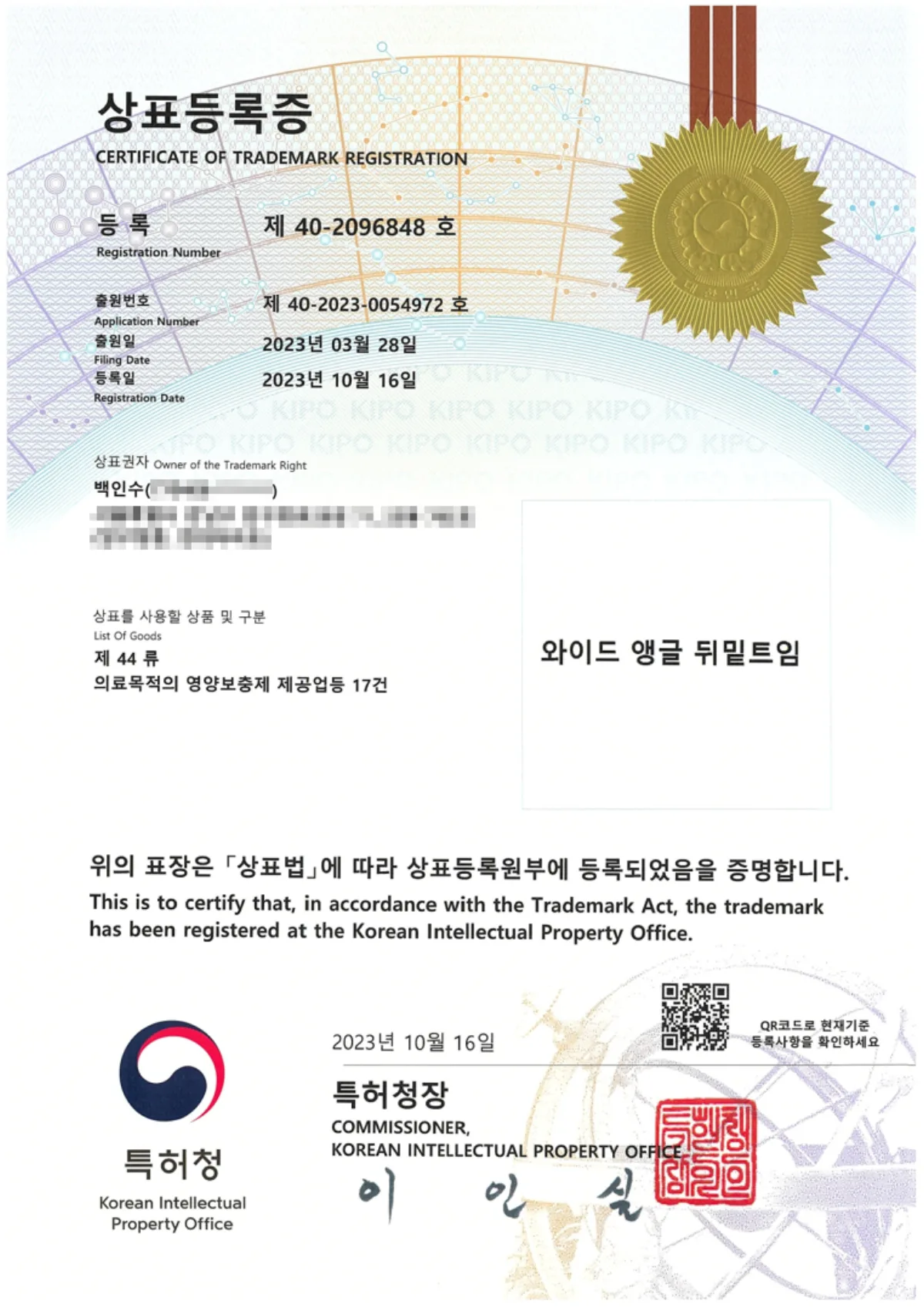
Lateral canthoplasty registered technique certificate

Garnet's outer-corner technique is registered as the trademarked Wide-angle™ lateral canthoplasty, performed with an accompanying lower-canthal opening where indicated. Trademark registration describes the named technique, not a superior outcome.

The lateral canthus and why technique matters

At the outer corner, the upper and lower tarsal plates meet at the lateral canthal tendon, which anchors the lids to the bony orbital rim. Lengthening the eye here means working with this junction and the conjunctival lining rather than simply cutting skin, because the outer corner has a tendency to scar back toward its original position if the support is not handled carefully. Approaches that preserve or precisely reconstruct the canthal angle are associated with fewer complications and more stable results (Aesthet Surg J 2025; DOI 10.1093/asj/sjaf062).

Garnet's technique is a lateral canthoplasty with an accompanying lower-canthal (bottom) opening where indicated, planned for each eye so the outer corner is extended and the slant softened without over-opening. The same outer-corner principles inform the matching work sometimes combined with lower blepharoplasty, where the outer corner and the lower lid are considered together, and with round eye correction when the lid shape needs reshaping rather than simple lengthening.

Lateral vs medial vs round-eye opening

Lateral canthoplastyEpicanthoplasty (medial)Round-eye correction
Corner addressedOuter cornerInner cornerOuter corner / lower lid
What it doesExtends the outer angleReleases the inner foldReshapes a rounded or retracted lid
Effect on slantSoftens a steep slantLittle effect on slantRestores a natural lid line
Common pairingLower blepharoplastyDouble-eyelid surgeryCanthoplasty / lid support
Typical useShort or steep outer eyeProminent inner foldOver-rounded or scleral-show eye

An integrated lateral canthoplasty that extends the fissure while preserving stability is described in Aesthet Surg J 2025 (DOI 10.1093/asj/sjaf062). The right corner - or combination - is individual; Dr. Baek advises at consultation, and the matching pages for epicanthoplasty and round eye correction explain each in detail.

How your safety is handled

Anaesthesia

Lateral canthoplasty is usually performed under local anaesthesia, with light sedation added where it helps comfort over a short procedure. Your medical history and any allergies are reviewed beforehand, and the plan is agreed with you and the anaesthesia team.

Single-surgeon monitoring

Because Garnet caps the day at two surgeries, the procedure is unhurried and the same surgeon who planned the case carries it out and reviews recovery - there is no separate operating doctor and no rotation of care.

Foreign-patient programme

Garnet is registered with Korea's foreign-patient programme; pre-operative checks, scheduling and after-care are coordinated for international visitors in English.

Honest assessment

If an outer-corner extension would over-open the eye or risk reverting, or if a different combination suits you better, that is said at the consultation. Photos can be reviewed before you travel.

Where the line sits

Much of a lateral canthoplasty is done through the conjunctiva (the inner lining) at the outer corner, so a significant part of the work leaves no external skin scar. Where a short skin extension is needed at the very outer corner, the line is placed in the natural outer-corner contour so it settles discreetly as it heals.

Any external mark is permanent but is designed to be inconspicuous once mature, and most are not obvious in everyday settings. The outer corner can be prone to scarring back inward, so stable fixation and a tension-aware closure matter; Dr. Baek reviews scar maturation and corner position at the 1-, 3- and 6-month visits and advises on care and, if ever needed, revision.

Before & After

Outer-corner results are identifiable, so full before/after sets are reviewed privately at consultation with consent rather than published here. Results, recovery and suitability vary by individual and are not guaranteed.

Week by week

Days 1-3
Mild swelling and some bruising around the outer corners build over the first few days. Keep the head elevated and use cold compresses as advised. Discomfort is usually mild and managed with simple medication; the corners may feel tight or watery.
Days 4-7
Swelling begins to ease and bruising starts to fade. The outer-corner line, where present, is still pink. Many people manage light routine, though the eyes still look freshly operated.
Day 7
Sutures, where used externally, are removed around day 7; internal conjunctival sutures may dissolve. The corner looks neater once the stitches are out, though residual swelling continues for a while.
Weeks 1-2
Most social downtime is over for everyday settings, with some residual swelling and pinkness that keep easing. Eye make-up is resumed only when cleared, and the outer corner is still settling.
Months 1-6
The outer-corner shape and position settle and any line matures over the following months. Dr. Baek reviews healing at one, three and six months - in person, or by messenger after you return home.

Do

Keep the head elevated early, use cold then warm compresses as advised, take medication as prescribed, keep the area clean and dry, and keep your follow-up visits.

Avoid

Rubbing or pulling at the outer corners, eye make-up until cleared, strenuous exercise and bending early on, alcohol and smoking, and direct sun on the healing area.

How long does it last?

Because lateral canthoplasty repositions the outer canthal angle structurally, the lengthening is intended to be a lasting change. Preserving the canthal angle and securing the corner stably are associated with results that hold and with fewer complications than over-aggressive techniques (Kim et al., Arch Plast Surg 2016; DOI 10.5999/aps.2016.43.4.316).

Individual results depend on the original anatomy, lower-lid support and how the corner heals. A known consideration is partial relapse, where the outer corner scars back toward its starting position; conservative, well-fixed planning lowers this risk, and any concern is assessed individually. The surrounding face continues to age normally, and the result does not prevent other eyelid procedures later.

Often planned together

Epicanthoplasty

Lateral canthoplasty is often planned with an epicanthoplasty at the inner corner, so both ends of the eye are balanced and the opening is lengthened evenly.

Lower blepharoplasty

A lower blepharoplasty may be combined where under-eye bags or lower-lid skin are also a concern, and the outer corner and lower lid are treated as one unit.

Double-eyelid surgery

Non-incision or incision double-eyelid surgery may be added where the upper-lid crease is part of the overall eye plan.

Round eye correction

Where the lid shape - not just the length - needs reshaping, round eye correction may be planned alongside so the lid line and the corner are considered together.

An honest word on risk

Every operation carries risk. For lateral canthoplasty the most relevant concerns are partial relapse of the outer corner and, if extended too far or with weak lower-lid support, a pulled-down or rounded lower lid. Techniques that preserve the canthal angle and fix the corner stably are reported to reduce these complications (Arch Plast Surg 2016; DOI 10.5999/aps.2016.43.4.316). Careful patient selection is part of lowering the risk.

Other possible issues include temporary watering or irritation, mild asymmetry between the corners, conjunctival redness, over- or under-correction, and rarely a visible outer-corner scar. Over-opened outer corners can look unnatural, which is why Garnet plans a conservative extension. These are explained individually at consultation.

What reduces risk in practice: realistic planning of how far to extend, checking lower-lid support before opening, stable fixation, and follow-up by the operating surgeon. Garnet's single-surgeon, low-volume model is built around exactly this kind of unhurried planning and personal after-care.

Planning from abroad

Most international patients plan roughly 7-10 days in Korea for a lateral canthoplasty, so sutures can be removed by the surgeon before travel and the early swelling has settled. The coordinator confirms the timing for your specific plan, especially if you are combining it with inner-corner or lower-lid surgery.

Before you travel, send clear photos (front and a relaxed close-up of the outer corners) and a note on your concern and dates through WhatsApp, LINE or the form below. You'll get an honest pre-assessment - including whether an extension is worthwhile and stable for your anatomy - rather than a hard sell.

Garnet is registered with Korea's foreign-patient programme and coordinates consultations, scheduling and after-care in English. After you return home, Dr. Baek can continue to review your recovery by messenger.

Guides for international patients

Questions about this procedure

What does lateral canthoplasty actually do?
It extends the outer corner of the eye to lengthen the visible opening and soften a steep outer slant, sometimes with a small lower-corner opening to balance the shape. The aim is a longer, calmer eye that still looks natural; the amount is planned at consultation.
How is lateral canthoplasty different from epicanthoplasty or round-eye correction?
All three change the eye opening but at different corners. A lateral canthoplasty extends the outer angle; an epicanthoplasty releases the inner-corner fold; a round eye correction reshapes an over-rounded or retracted lid. The right corner, or a combination, is individual.
Lateral canthoplastyEpicanthoplasty (medial)Round-eye correction
Corner addressedOuter cornerInner cornerOuter corner / lower lid
What it doesExtends the outer angleReleases the inner foldReshapes a rounded or retracted lid
Effect on slantSoftens a steep slantLittle effect on slantRestores a natural lid line
Common pairingLower blepharoplastyDouble-eyelid surgeryCanthoplasty / lid support
Typical useShort or steep outer eyeProminent inner foldOver-rounded or scleral-show eye
Does Dr. Baek perform the surgery himself?
Yes. Garnet is a single-surgeon practice, so Dr. Baek handles the consultation, the procedure and the follow-up personally - there is no separate operating doctor and no rotation of care. The same surgeon removes your sutures.
Will there be a visible scar at the outer corner?
Much of the work is done through the inner conjunctival lining, so a large part leaves no external scar. Where a short skin extension is needed, the line sits in the natural outer-corner contour; for the inner corner instead, see epicanthoplasty.
Can lateral canthoplasty be combined with other eye surgery?
Often, yes. It is frequently planned with an epicanthoplasty at the inner corner or a lower blepharoplasty in the same sitting where the consultation shows it balances the eye shape.
What anaesthesia is used and how much does it hurt?
Usually local anaesthesia, with light sedation added for comfort where appropriate, over a roughly 30-60 minute procedure. Most people describe pressure and watering rather than sharp pain, settling within a few days and managed with simple medication.
How long is recovery after lateral canthoplasty?
Sutures, where external, come out around day 7 and most social downtime is over by about 1-2 weeks, with residual swelling that keeps easing. The outer-corner shape settles over the following months.
How long should I stay in Korea?
Most international patients plan about 7-10 days, so sutures can be removed by the surgeon and early swelling settles before travel. The coordinator confirms timing for your plan, especially if you combine it with other eye surgery.
Does the outer corner ever go back to how it was?
Partial relapse, where the outer corner scars back toward its starting position, is a known consideration. Conservative planning and stable fixation lower this risk; if the corner relaxes more than wished, Dr. Baek assesses a revision individually.
Am I a good candidate for lateral canthoplasty?
If your outer eye angle is short or steep and you want a natural, proportionate extension, you may be a good candidate. If your lower lids are lax or already rounded, round eye correction may be more appropriate; this is discussed honestly at consultation.
Will my eyes look obviously operated?
The aim is a natural extension that softens the slant, not the maximum possible change. Planning a conservative opening and keeping the corners symmetrical is intended to avoid an obviously operated look; the plan is agreed with you beforehand.
What are the main risks?
The main concerns are partial relapse and, with weak lower-lid support, a pulled or rounded lower lid; temporary watering, redness and mild asymmetry are also possible. These are uncommon and are explained individually at consultation, and careful planning reduces them.
Can I see before-and-after photos?
Outer-corner results are identifiable, so full before/after sets are reviewed privately at consultation with consent rather than published. Dr. Baek will show relevant examples and discuss what is realistic and stable for your anatomy.
Do you perform revision lateral canthoplasty?
Yes. Dr. Baek assesses revision cases - including relapsed corners, over-opened eyes or pulled lower lids from previous surgery - individually; bring records and photos to the consultation so the history can be considered.
How do I start without flying to Korea first?
Send photos of your outer corners and your dates through WhatsApp, LINE or the form below. You'll get an honest pre-assessment - including whether an extension is worthwhile and stable for your eye - before you plan a trip.

Sources

  1. Kim YJ, Lee KH, Choi HL, Jeong EC. Cosmetic Lateral Canthoplasty: Preserving the Lateral Canthal Angle. Arch Plast Surg. 2016. DOI 10.5999/aps.2016.43.4.316. link
  2. Xu P, et al. Integrated Lateral Canthoplasty for Simultaneous Lateral and Vertical Palpebral Fissure Enlargement. Aesthet Surg J. 2025. DOI 10.1093/asj/sjaf062. link
  3. Hwang K. Medial Epicanthoplasty with the Skin-Redraping Technique: Technical Refinements for Predictable Outcomes. Plast Reconstr Surg. 2025. DOI 10.1097/PRS.0000000000011533. link

Citations are provided for general education. This page is informational and does not replace an in-person consultation; suitability, technique and recovery are individual.

Ask Dr. Baek’s team

Send photos and your question before you travel. An English-speaking coordinator reviews every enquiry and replies with honest guidance on whether surgery is appropriate, the likely plan and timing.

  • Reviewed by the clinic coordinator, not a bot
  • Photo-based pre-assessment before you fly
  • Foreign-patient scheduling & after-care
  • One surgeon for consultation, surgery and follow-up

Prefer to chat now? Reach the coordinator directly:

Request a consultation

  • WhatsApp
  • LINE
  • WeChat
  • Telegram
  • Email
  • Eye surgery
  • Rhinoplasty
  • Facial lifting
  • Forehead & brow
  • Fat grafting & contouring
  • Revision

Submits in real time to Garnet’s Supabase intake (branch: garnet). Your details are handled per our privacy policy.

Book consultation