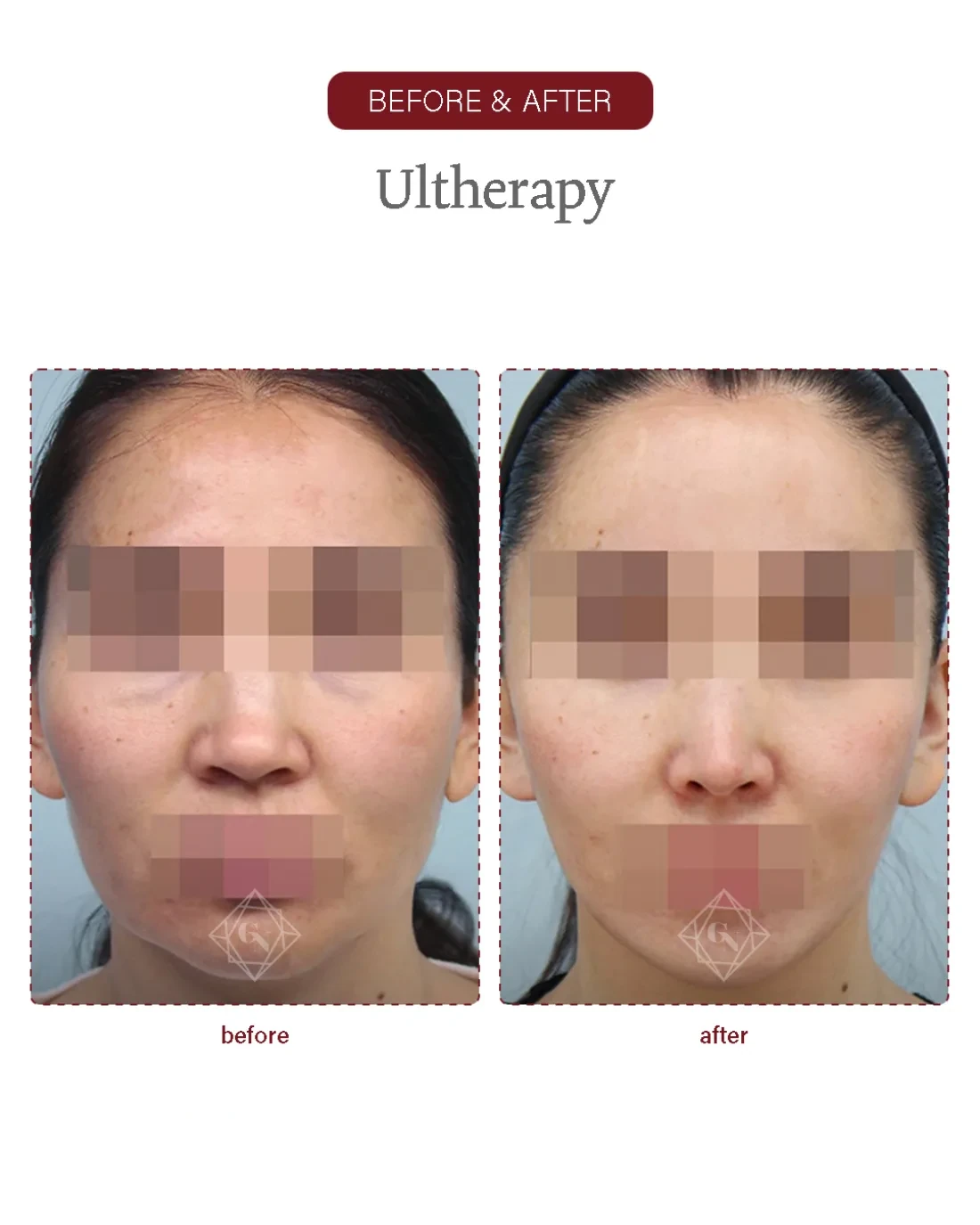
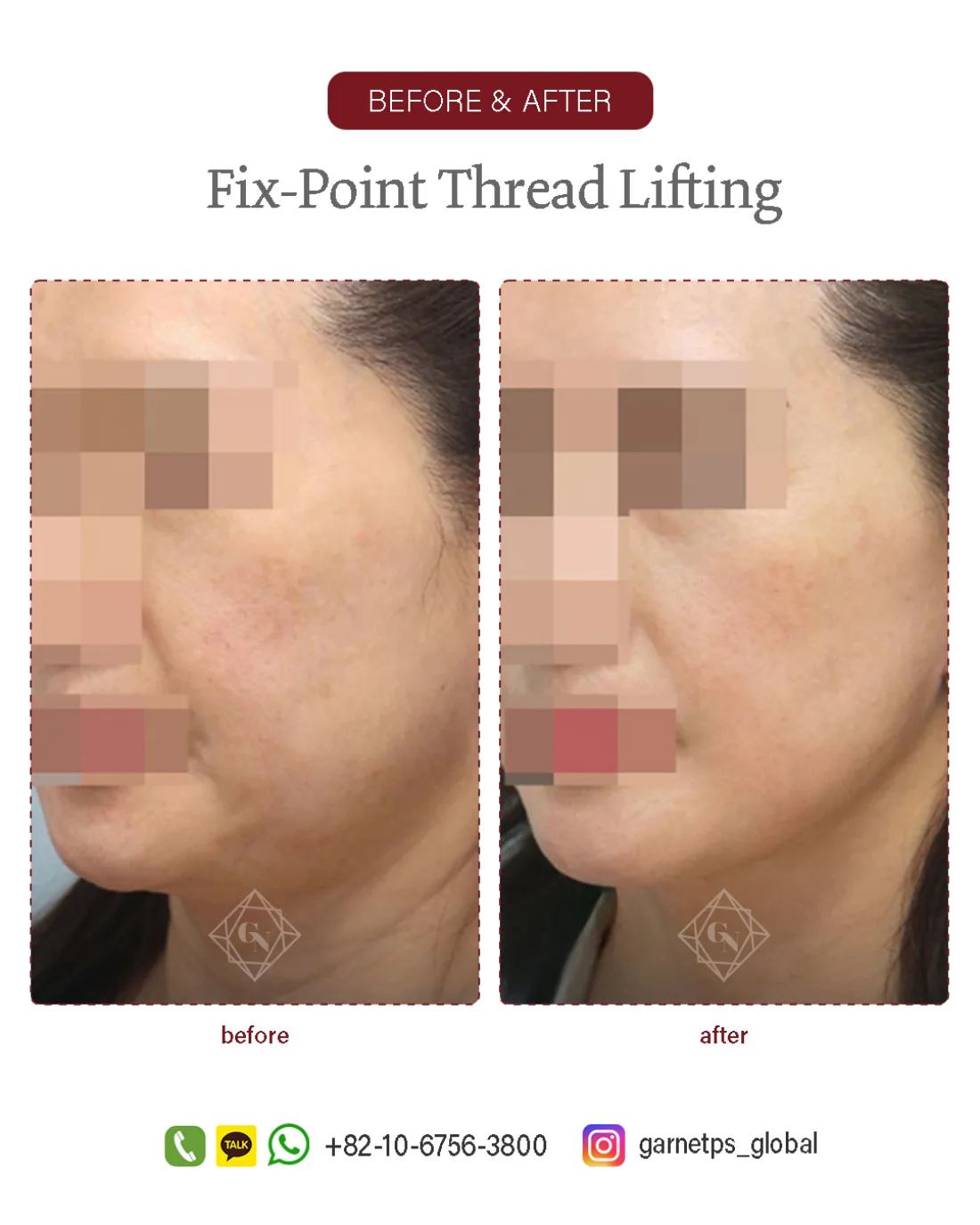
A deep-plane facelift repositions the deeper facial layer (the SMAS) and the ligaments that hold it, rather than pulling the skin. At Garnet it is planned and performed by one board-certified plastic surgeon, Dr. In-Soo Baek, from consultation through every follow-up.
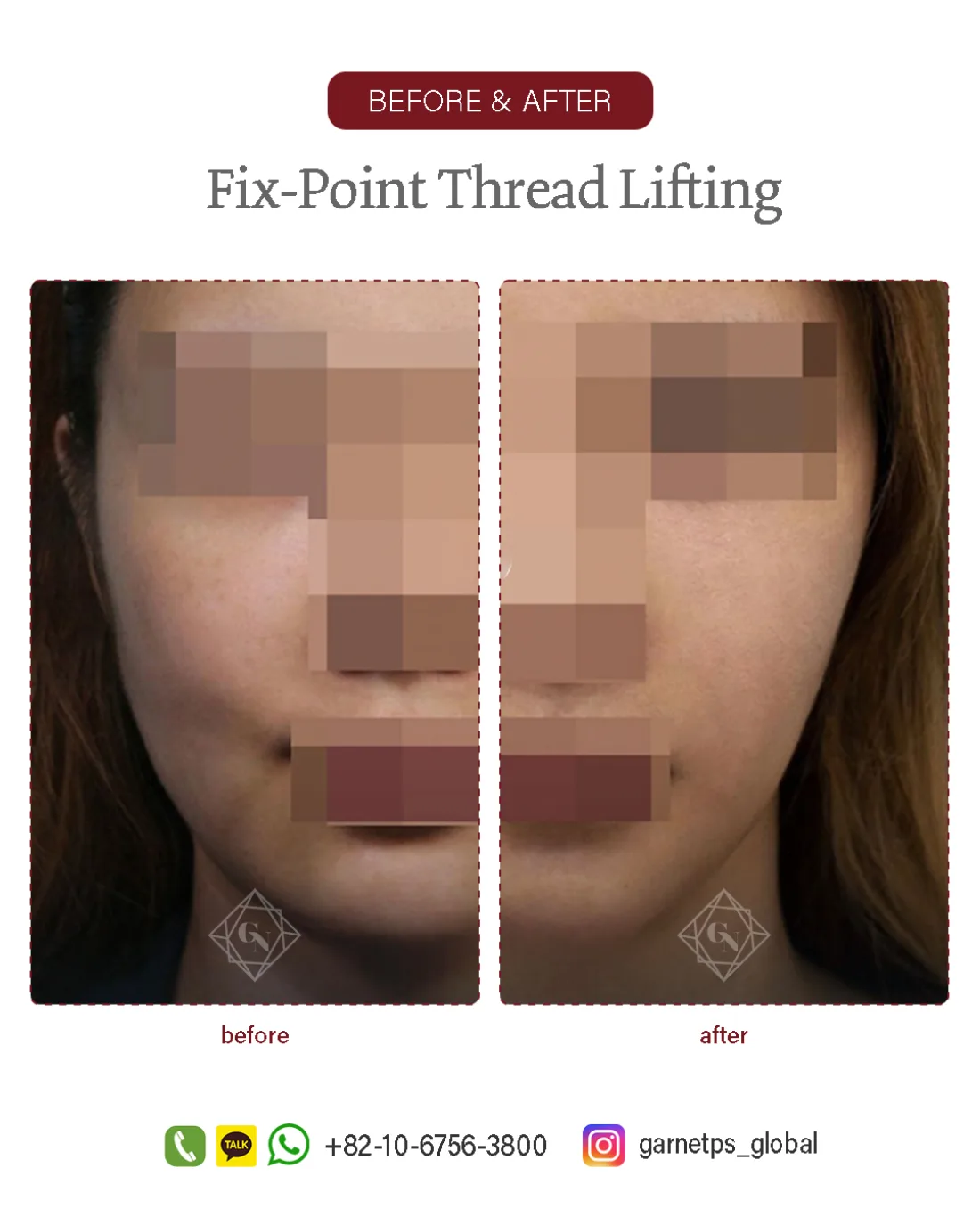
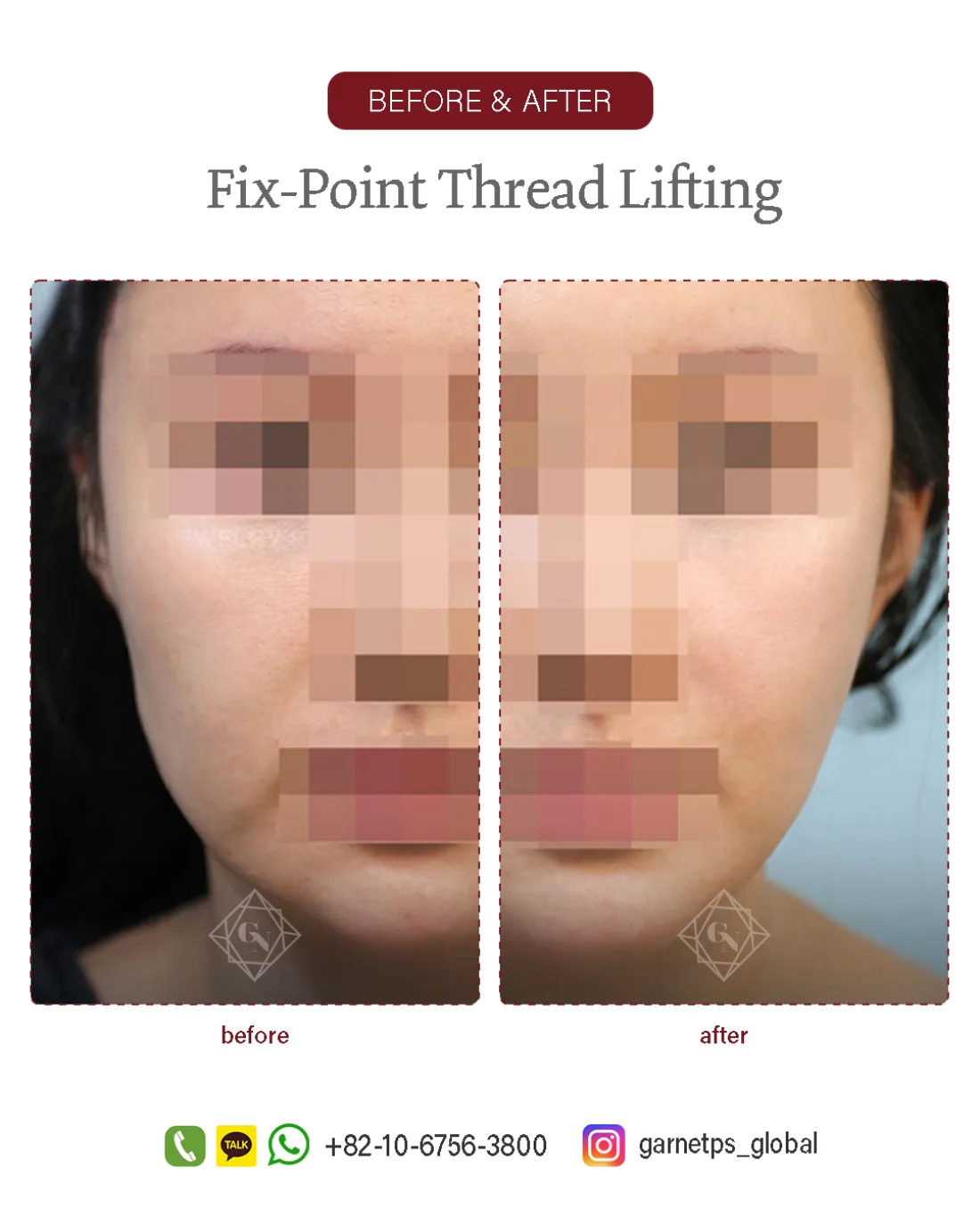
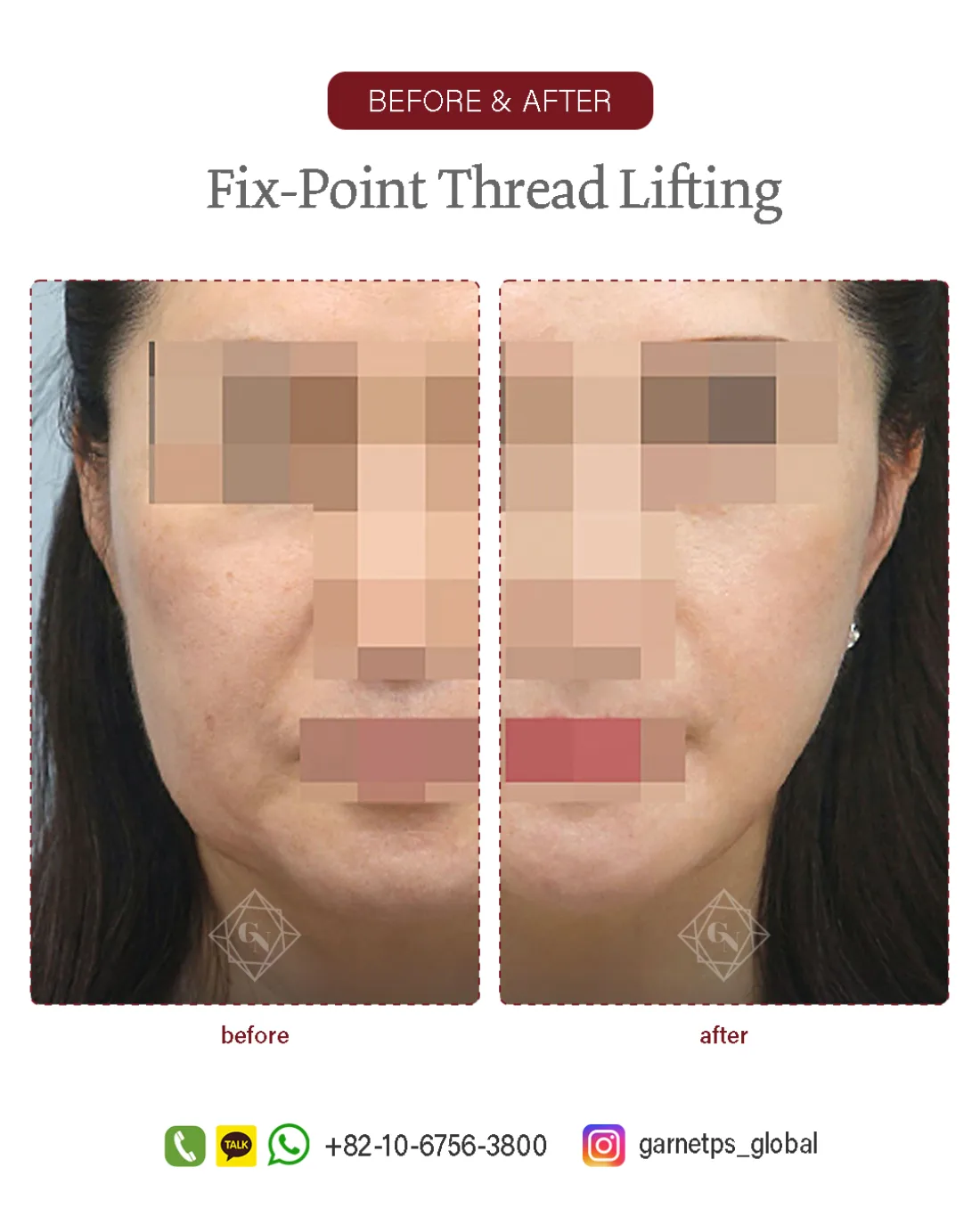
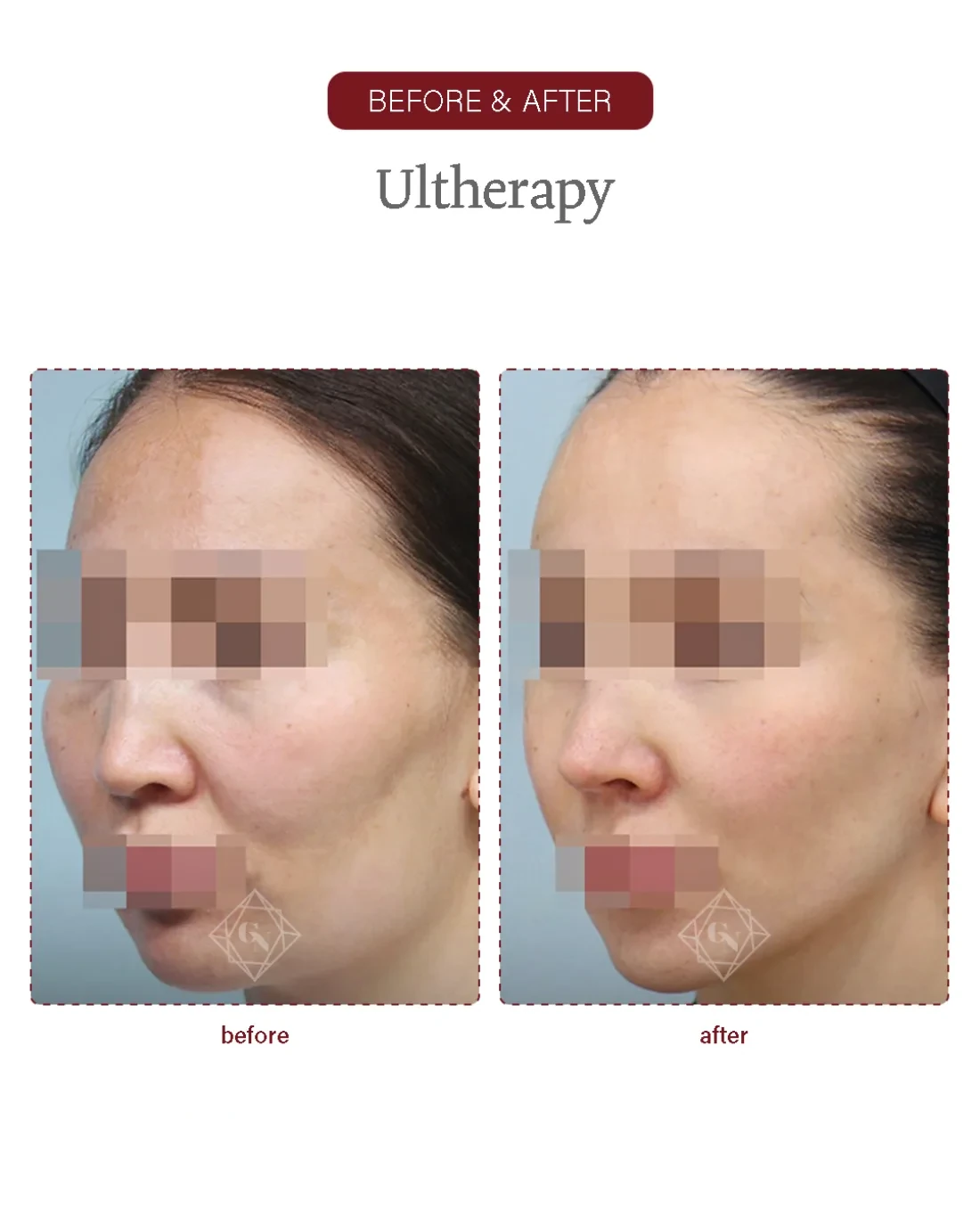
Lifting & contouring results of actual Garnet patients (published with consent). Facelift before/after sets are reviewed privately at consultation, as faces are identifiable. Results, recovery and suitability vary by individual and are not guaranteed.

Garnet is well known for neck-wrinkle and lifting surgery. The facility is excellent and I’m thoroughly satisfied with the friendly consultation and the surgeon’s skill.
Director Baek In-soo, thank you so much. Thanks to you I keep getting told I look younger — it feels like I’ve gone back to my younger days.
I had upper and lower eyelid surgery and I’m really satisfied. The director and the manager were both so kind and clear.
I started with under-eye fat repositioning — the director and the manager are genuinely kind and good at what they do. I’ll be back.
I came on a referral and was very satisfied thanks to the doctor’s kind consultation and clear explanations. The nurses were friendly too.
I kept reading the reviews and came trusting the many mentions of skill and kindness. The clinic was busy with patients and spotless.
A deep-plane facelift is a facial-rejuvenation operation that releases and repositions the deeper musculo-aponeurotic layer of the face (the SMAS) together with the overlying skin as a single unit, after dividing the retaining ligaments that tether it. Because the lift is carried in a plane beneath the SMAS, the tension is taken by the deep tissue rather than by the skin itself.
As the face ages, the visible change — flattening of the cheek, deepening of the nasolabial fold, jowls along the jawline — is driven by the deeper tissues descending, not by the skin alone. A skin-only lift pulls a layer that was never the cause; it can look tight, and because skin stretches, the effect tends to fade.
The deep-plane approach works one layer down. The SMAS (superficial musculo-aponeurotic system) is a continuous sheet that links the superficial muscles of the face; it is anchored to the deeper structures by retaining ligaments. Releasing those ligaments and moving the SMAS and skin together lets the surgeon reposition the cheek and jawline where their support naturally belongs, and re-drape the skin without putting it under tension.
At Garnet this is a single-surgeon operation. Dr. Baek plans the case from the consultation, performs it himself, and reviews healing at set intervals; the clinic caps the day at two surgeries so each case has unhurried time. The stated aim is to address the concern you arrived with and to prevent foreseeable complications, rather than to chase the maximum possible change.
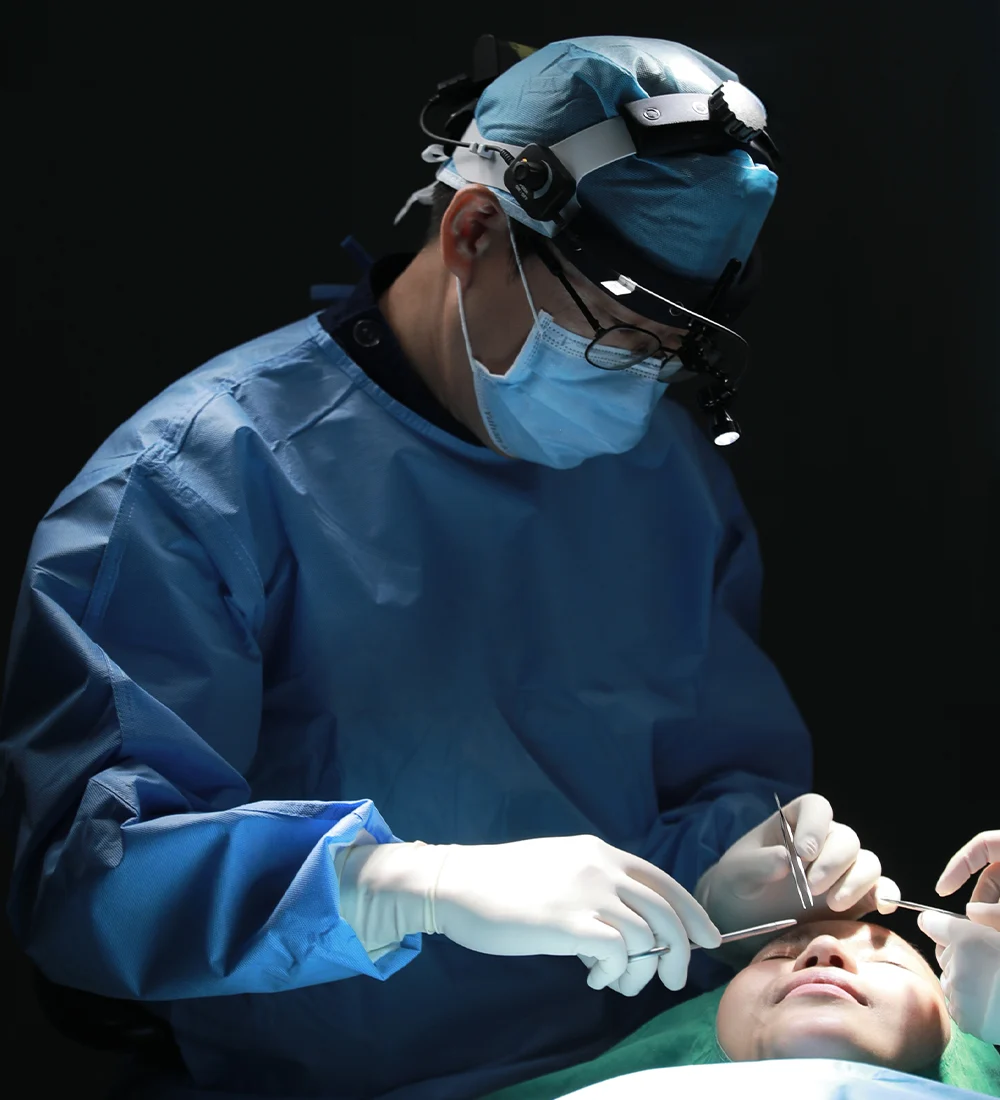
From incision design to the sub-SMAS release and fixation — every step by Dr. Baek.
A single surgeon, start to finish. Dr. Baek plans the case, performs the operation himself and reviews every follow-up. The clinic caps the day at two surgeries, so each operation has unhurried time.
The operation typically runs 3–4 hours under sedation or general anaesthesia. The steps below outline how a deep-plane lift is carried out at Garnet.
Dr. Baek assesses the face in person — skin quality, the degree of ligament laxity, the jawline and neck — and agrees the plan and incision design with you. Imaging (3D / CT / ultrasound) is used only where it adds something.
Lines are placed along the hairline and in the natural creases in front of and behind the ear, so they settle into existing contours as they heal. The design is tailored to your hairline and ear anatomy.
Working in the deeper plane, the retaining ligaments are divided and the SMAS is released so the deep layer and skin move together as one composite flap, without separating the skin from the tissue beneath it.
The SMAS is repositioned along its natural vector and fixed; the skin is then re-draped and trimmed without tension, which is what helps avoid the over-tight look of a skin-only lift.
Where the consultation shows it, a neck lift (with platysma work) or fat grafting is performed in the same sitting to balance the result.
Fine closure, dressing and light compression. Because Garnet is single-surgeon, Dr. Baek reviews you himself before you settle in and at each follow-up.

The trademarked Deep mini facelift™ applies the same deep-plane principle through a shorter approach for earlier change. Trademark registration describes the named technique, not a superior outcome.
Three structures explain why a deep-plane lift behaves differently from a skin or standard SMAS lift: the SMAS sheet, the retaining ligaments, and the spaces (glide planes) between them. The retaining ligaments — temporal, lateral-orbital, zygomatic, masseteric and mandibular — anchor the soft tissue to the facial skeleton, and their age-related laxity is a major contributor to sagging, jowling and volume descent (Mendelson, Aesthetic Plast Surg 2013; DOI 10.1007/s00266-013-0066-8).
In a deep-plane lift the dissection enters the natural space beneath the SMAS and divides the relevant ligaments so the whole composite flap — skin, fat and SMAS — can be moved as a unit. Because the released ligaments are what allowed the descent in the first place, addressing them directly is what lets the result sit naturally and hold. Garnet plans the release for each face individually; the same principles also inform the trademarked Deep mini facelift™ used for earlier, more localised change.
| Skin-only lift | SMAS facelift | Deep-plane facelift | |
|---|---|---|---|
| Layer addressed | Skin | SMAS folded / sutured | Sub-SMAS + ligaments released |
| Tension on | Skin | SMAS & skin | Deep tissue (skin tension-free) |
| Natural-looking | Can look tight | Good | Designed to avoid a pulled look |
| Mid-face lift | Limited | Moderate | Greater elevation |
| Typical use | Rarely alone now | Many cases | Mid-face / jowl descent |
A systematic review and meta-analysis comparing the two deeper techniques is published in Aesthetic Plast Surg 2025 (DOI 10.1007/s00266-025-05118-x). The right choice is individual — the editorial guide deep-plane vs SMAS facelift walks through it, and Dr. Baek advises at consultation.
A deep-plane facelift is usually performed under deep sedation or general anaesthesia, decided with you and the anaesthesia team for comfort and safety over a 3–4 hour operation. Your medical history is reviewed beforehand.
Because Garnet caps the day at two surgeries, the operation is unhurried and the same surgeon who planned the case carries it out and reviews recovery — there is no separate operating doctor and no rotation of care.
Garnet is registered with Korea's foreign-patient programme; pre-operative checks, scheduling and after-care are coordinated for international visitors in English.
If surgery is not appropriate, or a lighter option suits you better, that is said at the consultation. Photos can be reviewed before you travel.
Facelift incisions are placed where they can hide: within the hairline at the temple, following the natural fold in front of the ear, around the earlobe and into the crease behind the ear, then back into the hairline. The deep-plane technique re-drapes the skin without tension, which is one of the factors associated with finer, flatter scars over time.
Scars are permanent but are designed to settle into existing contours and the hairline, so they are not usually obvious in everyday settings once mature. Healing varies by individual and by skin type; Dr. Baek reviews scar maturation at the 1-, 3- and 6-month visits and advises on scar care.
Keep the head elevated, use cold compresses early, take medication as prescribed, sleep on your back, walk gently, and keep your follow-up visits.
Strenuous exercise, bending and heavy lifting early on, alcohol and smoking, very hot showers/saunas, and direct sun on healing scars until cleared.
No facelift stops ageing, but a deep-plane lift is associated with durable structural support because it repositions the deep layer rather than relying on the skin. In a 30-year series characterising outcomes and longevity, patients waited a median of roughly 11 years before seeking a revision, with some going far longer (Levin & Frankel, Facial Plast Surg Aesthet Med 2026; DOI 10.1177/26893614261422044).
Individual longevity depends on tissue quality, lifestyle (sun, smoking, weight change) and how the face ages afterwards. Garnet's approach is to plan the lift so it sits naturally from the start, since a result that was never over-pulled tends to age more gracefully. Skin-surface ageing continues independently and can be maintained separately over time.
A facelift and a neck lift are frequently planned together, since the jawline and neck age as one unit; platysma work addresses neck bands and the Pelican™ procedure refines the under-chin.
Fat grafting can restore lost volume in the mid-face or temples that lifting alone does not replace, for a more rested rather than only tighter look.
Upper or lower eyelid surgery or a brow/forehead lift may be combined where the upper face is part of the concern.
For earlier or more localised change, the trademarked Deep mini facelift™ uses the same deep-plane principle through a shorter approach.
Every operation carries risk. For facelift surgery the most reported early complication is haematoma (a collection of blood under the skin), with infection much less common; in a large analysis of 11,300 facelift patients, haematoma occurred in about 1.1% and infection in about 0.3% (Aesthetic Surg J 2016; DOI 10.1093/asj/sjv162). Male sex and high blood pressure are recognised risk factors.
Other possible risks include temporary changes in skin sensation, asymmetry, scar-related issues, and — uncommonly — temporary or, rarely, lasting weakness of a facial-nerve branch. Smoking raises wound-healing and skin risks. These are explained individually at consultation.
What reduces risk in practice: careful patient selection and blood-pressure control, meticulous technique, a tension-free skin closure, and follow-up by the operating surgeon. Garnet's single-surgeon, low-volume model is built around exactly this kind of unhurried planning and personal after-care.
Most international patients plan roughly 10–14 days in Korea for a deep-plane facelift, so sutures can be removed by the surgeon before travel and the early swelling has settled. The coordinator confirms the timing for your specific plan.
Before you travel, send clear photos (front, three-quarter and side) and a note on your concern and dates through WhatsApp, LINE or the form below. You'll get an honest pre-assessment — including whether surgery is appropriate — rather than a hard sell.
Garnet is registered with Korea's foreign-patient programme and coordinates consultations, scheduling and after-care in English. After you return home, Dr. Baek can continue to review your recovery by messenger.
| Skin-only lift | SMAS facelift | Deep-plane facelift | |
|---|---|---|---|
| Layer addressed | Skin | SMAS folded / sutured | Sub-SMAS + ligaments released |
| Tension on | Skin | SMAS & skin | Deep tissue (skin tension-free) |
| Natural-looking | Can look tight | Good | Designed to avoid a pulled look |
| Mid-face lift | Limited | Moderate | Greater elevation |
| Typical use | Rarely alone now | Many cases | Mid-face / jowl descent |
Citations are provided for general education. This page is informational and does not replace an in-person consultation; suitability, technique and recovery are individual.
Send photos and your question before you travel. An English-speaking coordinator reviews every enquiry and replies with honest guidance on whether surgery is appropriate, the likely plan and timing.
Prefer to chat now? Reach the coordinator directly: